 Food Hygiene

 Free CPD Certificate on Completion

 Fire Safety
No products in the basket.


In the UK, an average of 2,133 food safety incidents were recorded annually between 2019/20 and 2023/24 (according to the UK Food Security Report 2024). Kitchen safety issues play a significant role in this. Lack of proper knowledge and practice is a major concern here.
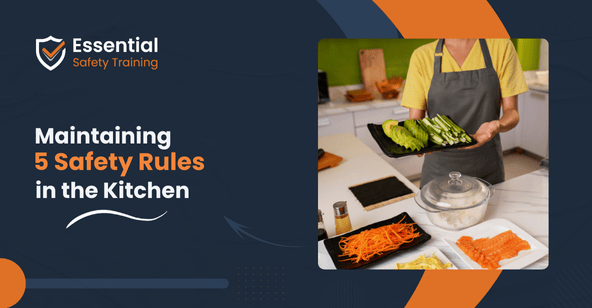
This brings us to an important question: What are the safety rules of the kitchen? There are 5 safety rules in the kitchen which are considered the most essential ones. Following these 5 safety rules will not only keep our kitchen safe and hygienic, but also keep it organised and hazard-free.
Here, we will help you with valuable information and insights on kitchen safety rules, common hazards in the kitchen, and how to maintain kitchen safety. Learn more.

What is Kitchen Safety?
Kitchen safety is an effective practice that helps prevent any hazards while cooking, preparing, handling, orany food processes. Some of the common hazards that happen in the kitchen are accidents and injuries from cuts, burns, falls, and food-related hazards like contamination, allergies, foodborne illness, etc.
Kitchen safety also includes kitchen hygiene and proper precautions. Kitchen hygiene is the practice of keeping your kitchen clean and hygienic. A clean kitchen is considered a safer kitchen that prevents any food-related hazards.
What are some common hazards in the kitchen?
There are some common hazards in the kitchen that need to be made known. By adhering to the strict guidelines of food safety, you can minimise the possibility of any hazardous incidents happening, whilst at the same time ensuring that everyone gets a meal free of any contaminants.
Let’s explore some of the common hazards of the kitchen that can make your kitchen an unsafe place to work!
- Food Safety Hazards
Level 2 Food Hygiene & Safety
Learn the kitchen safety essentials and ensure food safety with our Level 2 Food Hygiene & Safety.
Enrol Now
Food safety hazards include food-related hazards like cross-contamination, food poisoning, foodborne illnesses, etc.
- Cross-contamination
Raw meat in contact with cooked food.
- Improper Storage
Foods stored in the Temperature Danger Zone (5 °C- 60 °C/40°F -140°F) for too long.
- Poor Hygiene
Unwashed hands, contaminated surfaces.
- Physical Hazards
Physical hazards include slips, trips, falls, cuts, burns, scalds, and machinery injuries.
- Slips, Trips & Falls
Sloppy floors and spills, slippers, debris, uneven surfaces.
- Cuts
Blades, knives, broken crockery, and wrong cutting methods.
- Burns & Scalds
Hot cookers, stoves, boiling water, oil spills, dishwashers.
- Machinery Injuries
Out of mixers, blenders and slicers, when in the wrong hands or unguarded.
- Fire & Electrical Hazards
Fire and electrical hazards include fire hazards in the kitchen, grease fires, and electrical hazards.
- Unattended Cooking

A leading cause of fires.
- Grease Fires
From oil overheating.
- Flammable Items
Storing clothes, paper, or loose clothing in areas of heat.
- Faulty Appliances/Cords
Exposed wires, damaged plugs.
- Chemical Hazards
Chemical hazards include handling chemical substances that are harmful inappropriately. It can cause safety hazards in the kitchen.
- Improper Storage
Washing materials stored beside food.
- Misuse
Handling strong chemicals without the use of proper PPE or ventilation.
- Ergonomic & Other Risks
Ergonomic and other risks involve injuries from mismanaged work areas, lifting equipment, and other kitchen appliances.
- Lifting Injuries
Lifting heavy pots and boxes, as well as equipment, improperly.
- Head/Eye Injuries
From falling objects or splashes.
- Crowded Spaces
In commercial kitchens, resulting in collisions.
Level 3 Food Hygiene & Safety
Ensure food safety, compliance, and protect public health with Level 3 Food Hygiene & Safety.
Enrol Now
As far as avoiding hazards in the kitchen is concerned, it has no uniform solution. Nonetheless, kitchen safety does follow certain broad rules that all people should follow to have a safe and hygienic kitchen.
What Are the 5 Safety Rules in the Kitchen?
The kitchen safety measures will help you cook, handle, or store food in an organised way and safe manner. It will prevent hazards from happening in the kitchen and protect your health with healthy food.
The 5 essential safety rules of the kitchen are as follows:
- Keeping it clean and hygienic
Wash your hands always prior to and after coming into contact with food, particularly raw meat. Clean spills as they occur to avoid slips and growth of bacteria, and use different cutting boards with raw meats and produce to avoid cross-contamination.
- Handling knives safely
Sharp knives are safer to use than dull ones. Trim away at your body and work on a flat surface, and keep your fingers in and put the knives in a block or a drawer to avoid accidents.
- Preventing burns & scalds
Hold hot objects with dry oven mitts, roll pot handles towards the back and inside of the oven, and keep the pot lid off your face to prevent steam.
- Preventing fire hazards
Never leave unattended food which is being cooked, never leave flammable material (towels, loose clothing and so on) anywhere around the fire, always cover a grease fire with a lid or baking soda and never use water.
- Ensuring electrical safety
Maintain the distance between appliances and cords and water and wet hands. Turning off appliances by grasping the plug and not the cord, and making sure that the cords are not frayed or damaged.

The five core food safety rules, promoted by the World Health Organisation (WHO), are:
- Keep clean (wash your hands and surfaces properly),
- Separate raw and cooked foods (prevents cross-contamination),
- Cook thoroughly to kill germs (high temperatures kill bacteria),
- Keep food at the correct temperatures (hot stays hot, cold stays cold), and
- Use safe water and raw materials (choose fresh, safe ingredients).
These rules will help prevent foodborne illnesses by stopping harmful bacteria from spreading and growing.
How to Maintain the Kitchen Safety Rules? Step-by-step Guide
The best safety practices are learned and applied on a daily basis, and that is how kitchen safety is effective. It will not only assist you in passing important safety certifications, but also facilitate a secure workplace for the team and your customers within your premises.
Let’s learn together how we can maintain a safe and clean kitchen by following the kitchen safety rules appropriately!
Step 1: Preventing slips, trips, and falls
The majority of slip injuries occur on wet floors, and falls are a result of poor housekeeping. You have to plan how to cope with such issues in times of peak hours when work is more intense.
As problems, the following ones should be taken into consideration:
- Prevents the floor from becoming wet or contaminated.
- Take care of the equipment so that no oil or water may be leaked.
- Use manual handling aids if possible.
- Teach workers the correct cleaning procedures (clean to dry), or place a wet floor warning sign so as to have people out of the wet area.
- Floors ought to be rough enough and easy to clean.
- Make sure that the places are well-lit.
- Use the right shoes, which have a good tread and also a flexible sole.
- Ensure that the floors are not uneven.
- Rearrange the work area, and
- Have a reporting system for any faults in equipment.
Step 2: Handling knives and other sharp objects in the kitchen
Reckless use is usually characterised by upper-arm and torso cuts. The following are to be taken into consideration:
- Provide adequate training to employees.
- Use knives that are appropriate.
- Keep knives sharp.
- Use a sharpening steel to sharpen knives.
- Cut on a stable surface.
- Wash up the knife carefully.
- Keep a knife with the blade downwards.
- Store knives securely.
- Wear Personal Protective Equipment (PPE) when necessary, such as when working with deboning, a suitable protective glove must be put on the non-knife hand.
Step 3: Proper use of manual handling
Complete Food Hygiene & Safety Bundle
Master food hygiene, safety, compliance, and kitchen safety tips with our complete masterclass bundle.
Enrol Now
Instances of how to minimise the issues of manual handling:
- Place heavy objects on shelves at the waist level.
- Keep the heavy stuff closer to where it is going to be utilised.
- Apply a team-work in activities like transporting a heavy pot.
- Purchasing cooking oil in cardboard boxes that are easy to handle and have strong handles.
- Have heavy equipment like a chest freezer on castors that can be locked down to ease the cleaning routines.
Step 4: Environmental factors
The following aspects should be taken into account when it comes to the environmental factors of kitchen safety:
- Install effective ventilation facilities.
- Fume exhaust and clean cooker hoods.
- Rest and have breaks in cool places.
- Gave out protective clothing to work in freezers.
Step 5: Preventing diseases like Dermatitis
Work contact dermatitis happens due to excessive exposure to water, soaps and cleaning agents, like washing-up, washing food, hand washing, and even contact with certain foods (some foods may result in allergic contact dermatitis)
- Do not touch cleaning agents, water and food where it is not necessary or advisable to do so, such as using a dishwasher instead of washing with water, and using tongs to lift foods instead of your hands.
- Contact is not always avoidable. To protect your skin, wear gloves when not engaged in some activity and most especially when cleaning. Moisturise the skin as frequently as possible.
- Regularly examine hands at risk of getting dermatitis (itchy, dry and reddish skin). Once detected early enough, it is curable.

Step 6: Preventing cross-contamination, foodborne illnesses or hazards
You can prevent foodborne illnesses or any other food-related hazards in the kitchen by avoiding cross-contamination. Keeping raw food items separate from cooked foods can prevent cross-contamination.
Other ways to avoid contamination are keeping your food away from chemical or harmful substances. You can use separate utensils for raw foods and other food items. Storing raw and cooked foods using proper food hygiene and safety practices can keep your food safe, healthy, and clean.
Frequently Asked Questions (FAQs)
How to 5S your kitchen?
The 5S of safety are Sort, Set in order, Shine, Standardise, and Sustain. You can 5S your kitchen by maintaining these safety measures. It will not only keep your kitchen safe and clean but also keep it organised and clutter-free.
What are the 4 points of food safety?
The four points of food safety are also known as the core four of food safety. These are Clean, Separate, Cook, and Chill. Maintaining them helps prevent foodborne illnesses or any other food-related hazards like contamination, food poisoning, etc.
What is the kitchen safety triangle?
The refrigerator, sink, and stove are the kitchen safety triangle. It’s designed to create an efficient workspace where the three main work areas are linked together. It also keeps the kitchen safe and more functional.
Conclusion
Food hygiene and safety are both important aspects of running a successful kitchen. Food hygiene and safety are must-have requirements for anyone working in the various food processes, be it professionally in the kitchen of a restaurant or just cooking dinner on an occasional basis at home.
There are 5 safety rules in the kitchen to ensure food safety. It is necessary to keep your kitchen clean and organised to cook without any hazards. To begin with, a clean kitchen is an efficient kitchen. In a clean kitchen, the workers have an opportunity to work faster and more efficiently.
It also improves the quality of food and satisfies customers. Second, a hygienic kitchen is a safer kitchen. The risk of foodborne illness is minimised when there is a clean environment during the preparation of food.
Essential Safety Training

At Essential Safety Training, we deliver a blend of online courses on safety and compliance. As a top-notch award-winning platform in the UK, we value learners and keep our commitment by creating more accessible, expertly crafted courses.