 Food Hygiene

 Free CPD Certificate on Completion

 Fire Safety
No products in the basket.


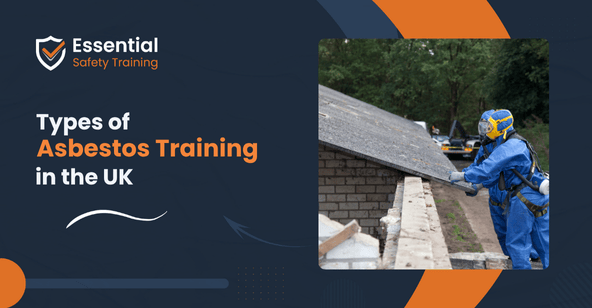
More than 5,000 people die each year in the UK due to the health risks of and exposure to asbestos. An estimation of 2,200-2,500 deaths from mesothelioma was reported, and a similar estimation was reported from asbestos-caused lung cancer and asbestosis.
Every workplace across the UK must provide essential asbestos training to employers and employees to prevent such asbestos-related health risks and hazards. If you’re wondering about how many types of asbestos training are there, then our informational guide will help you choose the right training for you.
Asbestos contains microscopic fibres, which are hazardous to health and resistant to heat, fire, and chemicals. Asbestos-containing materials (ACMs) are used in many products and are present in many workplaces.
What Is Asbestos?
Asbestos is a hazardous substance that causes severe health damage if someone inhales or breathes asbestos fibres. Asbestos fibres get released when asbestos-containing materials (ACMs) are disturbed or damaged.
The risk associated with exposure to asbestos over a long period is high when people inhale the asbestos fibres regularly. Frequent use of asbestos is seen in construction works, such as renovation, demolition, maintenance, etc.
All forms of asbestos are dangerous and lead to permanent diseases such as lung cancer, asbestosis, mesothelioma, and skin diseases when inhaled over an extended period. Besides this, short-term exposure to asbestos may result in skin irritation, infection, or mild respiratory illnesses.

How Many Types of Asbestos Are There?
There are six main types of asbestos that are marked into three different operations based on their danger levels. Chrysotile asbestos is the most common type that is used in products like cement sheets, roofing, insulation, brake linings, etc.
Apart from this, amosite, crocidolite, tremolite, anthophyllite, and actinolite are other forms of asbestos, with crocidolite asbestos (also referred to as blue asbestos) being the most hazardous type. In cement products and insulating materials, the most common types of asbestos can be found.
Let’s explore the three operations of asbestos based on their risk level!
- Type 1 Asbestos
Low-risk asbestos is termed Type 1, and this entails installation or removal of ceiling tiles composed of non-decaying asbestos-containing materials. Here, the tiles or materials are not broken, drilled, cut, or vibrated; hence, they do not produce dust or release harmful fibres.
- Type 2 Asbestos
Type 2 asbestos operations pose a moderate risk to workers in terms of asbestos exposure. The materials containing asbestos in this area are friable and non-friable; therefore, the workers should be cautious when handling type 2 asbestos.
- Type 3 Asbestos
Type 3 asbestos refers to high-risk asbestos operations in which workers have a higher potential of exposure to asbestos fibres. These operations are carried out by trained professionals and require a license permit from the relevant authority.
What Is Asbestos Training?
Asbestos training helps workers learn how to identify, manage, prevent, and minimise the hazards of asbestos in workplaces. Asbestos training covers the health dangers and prepares effective emergency responses.
Asbestos training assists employers and employees in adhering to the UK health and safety regulations of the workplace, especially the Control of Asbestos Regulations 2012, in order to achieve a safe work environment. It also safeguards their health against exposure to long-term risks of asbestos and sustains the general productivity.
Who needs asbestos training?
Asbestos training is categorised into three main types and is designed for those who work in places where asbestos is used, produced, or present frequently. It includes,
- Construction workers,
- Maintenance workers,
- Renovation and demolition workers,
- Heating or ventilation engineers,
- Carpenters,
- Plumbers,
- Electricians,
- Roofers,
- Painters and decorators,
- Plasterers and many more.
Who is responsible for providing asbestos training?
Employers have the sole responsibility of providing asbestos awareness training and other licensed and non-licensed asbestos training to employees. For any organisation, work industry, or individual, it is a legal requirement to provide asbestos training.
Complying with the Control of Asbestos Regulations 2012 emphasises the importance of learning effective skills. It is required for preventing the health risks of asbestos exposure. Asbestos management plays a vital role in workplaces where asbestos exposure is high and poses greater risks to workers’ health.

How Many Types of Asbestos Training Are There?
There are three main types of asbestos training for employers and employees to ensure a safe work environment where hazardous substances like asbestos and asbestos fibres are present, used in materials, or produced.
Here, you can get a comprehensive understanding of asbestos training and its different types and discover which asbestos training is the suitable one for you.
- Asbestos Awareness Training (Category A)
Asbestos Awareness Training is mandatory for all to work in a place where there is a high potential for asbestos exposure. It is a legal requirement for every employer and employee, particularly for those involved in construction work, like demolition, renovation, and maintenance workers.
In asbestos awareness training, learners understand what asbestos is, how asbestos fibres can get damaged or disturbed, and the severe health risks of short-term and long-term asbestos exposure.
Other than that, it creates awareness among everyone and ensures their compliance with the UK health and safety laws and with the Control of Asbestos Regulations 2012.
Asbestos Awareness (Category A)
Learn asbestos safety, legal compliance, and risk prevention with our CPD-accredited course.
Enrol Today
- Non-licensed Asbestos Work Training (Category B)
Non-licensed asbestos training is for those who are involved in a work environment where there is a higher risk of asbestos exposure. Category B non-licensed asbestos work training includes an in-depth understanding of asbestos awareness.
It helps learners identify the health risks, workplace hazards, and other potential risks of asbestos exposure. It doesn’t require a recognised licence from the relevant authorities, but it is mandatory to work in construction or maintenance.
- Licensed Asbestos Work Training (Category C)
Licensed asbestos training is for managers, supervisors, or any individual who is responsible for ensuring the health and safety of everyone at work. This training requires a recognised licence from the relevant authorities and is mandatory for every staff member in health and safety management.
It helps learners acquire skills that are effective in minimising the use of and health risks of asbestos exposure. It emphasises the importance of learning emergency responses and efficient preventive measures. By preventing risks and potential hazards, it protects its employees’ health. It also ensures a safe work environment for everyone.
Why Do You Need Asbestos Training?
The first and foremost reason for you to take asbestos training is to protect your health from asbestos exposure.
Asbestos training focuses on three main aspects, including identifying asbestos-related hazards and potential risks, minimising the use of materials containing asbestos, and taking effective preventive measures.
Let’s take a look at the primary reasons why you need asbestos training, including asbestos awareness training, licensed asbestos training, and non-licensed asbestos training!
- Preventing the health risks of asbestos exposure
Inhaling or breathing asbestos fibres through the air can cause serious harm to health. The effects of long-term exposure to asbestos may include asbestosis, mesothelioma, lung cancer, respiratory diseases, irritation of the skin, etc.
Training in asbestos will help workers prevent exposure to asbestos and reduce the health hazards. Awareness of asbestos is a legal and compulsory measure for all people who work in an area where asbestos is present.
- Identifying asbestos-related hazards and potential risks
Licensed and non-licensed asbestos training teaches employers and employees to identify asbestos at work. When you can identify asbestos in your workplace, you can avoid accidental exposure. It reduces health risks and other potential risks.
- Implementing effective preventive measures
Asbestos training will enable managers, supervisors, or anyone who is in charge of the health and safety of all people at work to learn the relevant skills. The skills enable them to put in effective preventive measures. It will minimise the use of asbestos-containing materials and avoid the risks of asbestos exposure.

Is it a legal requirement?
Asbestos training is a legal requirement in the UK, mandated by the Control of Asbestos Regulations 2012, for anyone who may encounter asbestos at work.
Category A, Asbestos Awareness Training, is mandatory for every employer and employee who works in an environment where asbestos is present. However, conducting risk assessment and implementing effective preventive measures in the workplace requires licensed asbestos training. Categories B and C of asbestos training may not be mandatory for everyone.
Under Regulation 10, it states that ‘Every employer must ensure that employees are given adequate information, instruction, and training where that employee is, or is liable to be, exposed to asbestos, or if that employee supervises such employees.’
How to Select the Right Asbestos Training Course?
If you want to choose the right asbestos training for you or your employees, you can look at the following requirements.
- First, you need to determine which training course will help you fulfil your responsibilities efficiently. Selecting a suitable training that covers the necessary skills you need to learn for your role is crucial here.
- Second, you have to select which accredited provider can help you with your whole learning process and make your learning experience easier, accessible, and reliable.
- Thirdly, look for the information, instruction, and training that your selected course provides you when it comes to learning about asbestos, its types and health risks, and the preventive measures to protect your health.
Online Asbestos Awareness Training
Online asbestos awareness training is more accessible and available than the traditional training program. When you are enrolling on a self-paced online learning program, you can adjust it to your busy schedule and be able to access it at any time and place.
Asbestos Awareness (Category A) and Asbestos Awareness (Category B) courses enable you to acquire the essential skills and knowledge regarding the risks of asbestos exposure in the workplace and how you can avoid them to prevent related health hazards of asbestos. It will assist you in ensuring a healthy and safe work environment.
Asbestos Awareness (Category B)
Explore asbestos identification, health impacts, and safe handling practices with our training course.
Enrol Today
Frequently Asked Questions (FAQs)
Can asbestos be burnt or buried?
Asbestos is a non-flammable and non-combustible substance that cannot be burned or buried. Burning asbestos will create smoke that has harmful asbestos fibres. Inhaling the fibres can cause severe health damage. It is also classified as a hazardous waste, which should not be buried.
Are asbestos fibres visible?
No, asbestos fibres are not visible to the naked eye. You cannot see, smell, or feel their presence since asbestos fibres are microscopic and smaller than a human hair. They can be examined only under a microscope and can be seen when a large lump of it gets disturbed.
Does asbestos come under COSHH?
No, COSHH (Control of Substances Hazardous to Health) covers a wide range of hazardous substances, but it does not cover asbestos. There are three main types of asbestos, and COSHH regulations 2002 do not cover any of them. Asbestos has its own regulations known as the Control of Asbestos Regulations 2012.
Conclusion
Having a comprehensive understanding of asbestos awareness and how many types of asbestos training are there is an important factor to ensure workplace safety.
Asbestos was widely used in construction in the 19th and 20th centuries. Asbestos inhalation was reported as the number one cause of work-related death in the whole world, resulting in more than 5,000 yearly deaths in the UK.
Workplace health and safety is an important aspect of our lives, and the majority of us would like to be at a place where our good health and safety are ensured. Asbestos training is therefore a requirement in all workplaces that use or contain asbestos.
Essential Safety Training

At Essential Safety Training, we deliver a blend of online courses on safety and compliance. As a top-notch award-winning platform in the UK, we value learners and keep our commitment by creating more accessible, expertly crafted courses.