 Food Hygiene

 Free CPD Certificate on Completion

 Fire Safety
No products in the basket.


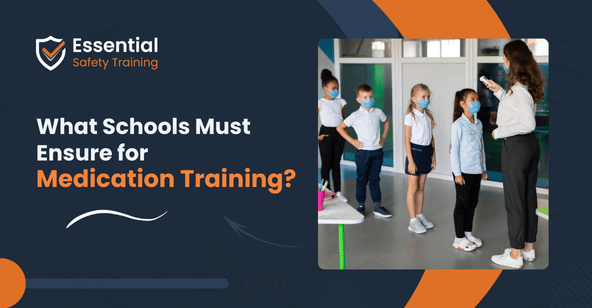
When children arrive at school each morning, parents trust that their child’s health and well-being are fully protected. But did you know that over 1.7 million UK children live with long-term medical conditions, according to NHS data. It means the school must be fully prepared to manage medication safety and do so confidently.
So, for child safety at school, you must have to know What Schools Must Ensure for Medication Training. It means the School must ensure that staff understand the children’s medical needs, medication types and legal duties. Staff will be ready for safe handling and accurate record keeping, including inhalers and EpiPens. Some clear policies, parental consent and individual Healthcare Plans (IHPs) to ensure safety and legal compliance.
In this blog, we will clear everything about why this training matters, how different medications work, how to store them, how to record them, how to respond in emergencies and why proper training builds trust with parents.

What is medication administration at school?
Every school should have a clear medication policy that everyone can easily access. Medication administration at school involves safely giving them the medicines they need during the school day. It’s a routine treatment, emergency medication or short-term prescriptions. Staff follow strict procedures to ensure every dose is accurate, safe, and given at the right time.
It also helps to store medicine in the correct way, keep accurate records, and communicate with parents and healthcare professionals. They manage this task very carefully. Schools help children stay healthy, confident, and able to focus on learning without disruptions caused by their medical conditions.
Why Schools Need Medication Administration?
There are some risk factors, which is why every school needs medication administration. So that the school place stays safe. So the risk factors are :
Chronic health conditions – Some students who have asthma, diabetes, epilepsy, or allergies require timely medication during school hours.
Sudden medical emergencies – Unexpected events like seizures or severe allergic reactions need immediate staff intervention.
Missed or incorrect doses – If any medicine is skipped and give the wrong medication can cause serious health complications for students.
Lack of parental supervision – During school, children rely on trained staff to safely administer prescribed medicines.
Complex medication schedules – Some students need multiple medications at specific times, requiring accurate tracking and administration.
Legal and safety obligations – Schools must follow UK laws and safeguarding guidelines to ensure student wellbeing.
Medication Administration Training
Improve your professional skills and protect those in your care With Medication Administration.
Enrol Now
What must schools ensure regarding staff training for medication administration?
Nowadays, safety is the main concern for every place. Schools have a legal and safeguarding responsibility to ensure that any member of staff who may be required to administer medication receives proper, up-to-date, and appropriate training.
Here’s what schools must ensure:
1. Staff Are Competent and Fully Trained
Schools must make sure that any staff who give medication are properly trained. They should be confident in what they are doing. The training usually covers things like safe handling of medicines, correct dosages, timing, side effects, emergency procedures and proper storage and disposal.
It also includes how to record everything accurately and respond if something unexpected happens.
2. Training Is Regularly Refreshed
Things change all the time. So, medical guidance, staff teams, and children’s health needs training. That’s why medication training shouldn’t be a one-off. Schools should refresh staff training every one to two years.
It is the reason to make sure everyone stays confident and up to date.
3. Enough Staff Are Trained
Schools need enough staff for training. Only one trained person isn’t enough. Schools need to make sure there is always plenty of trained staff available. This includes cover staff, teachers, and support workers who work closely with pupils who have specific medical needs.
4. Staff Are Not Forced or Pressured
This program is only for those who are willing and interested in taking this responsibility. Medication administration must be voluntary. Only staff who are trained and willing should handle medicines.
If they are not confident even with training, they shouldn’t be expected to give medication.
Whose responsibility is it to ensure that the school has the appropriate amount of medication?
To make sure that a school has the right amount of medication is really a shared job, but it starts with the parents or guardians. They’re the ones who need to send in the medication, make sure it’s labelled properly, and replace it before it runs out or expires.
Without that, the school simply can’t give the medication safely.
That said, the school also plays an important role. Staff like the school nurse, SENCO, or trained admin team usually keep an eye on how much medication is left.
When supplies are getting low, they’ll reach out to parents and let them know it’s time to send in more.
Why is it important that staff are trained to administer medication?
In schools, staff training for medication is very important. Because a child’s safety can depend on just one correct dose. When you look at the numbers, it really hits home. Around 72% of medication errors in schools happen because staff weren’t properly trained or misunderstood the instructions. which can be risky.
Mistakes can be like the wrong dose, a missed medication, or an inhaler used incorrectly. That’s why 63% of staff say they don’t feel confident giving emergency medication.
But when staff are trained well, they know how to spot symptoms early, understand exactly what medication is needed in an emergency.
Good training also makes life easier for everyone. Staff feel more confident instead of second-guessing themselves, parents trust the school more, and leaders know they are meeting legal and safeguarding responsibilities.
With the right training in place, a potentially stressful moment becomes something staff can handle smoothly and confidently every time.
How do you record medication administration?
You have to know how to record medication administration. Recording medication administration in schools is all about keeping things accurate, organised, and safe. Staff should use a medication administration record sheet or a similar log to note every dose given.
This record usually includes the child’s name, the medication, the dose, the time it was given, and the signature of the staff member who administered it. If a dose is missed, refused, or delayed, that must be written down to, and nothing is ever left to memory.
Most of the school also records things like expiry dates, changes to a child’s medication, and any side effects that occur. These records not only help keep track of what’s been given but also protect staff and students if any issues arise later.
In simple terms, write everything down, double-check it, and keep the record secure. It’s one of the safest habits a school can have.

What are the guidelines for medication administration?
Every school should follow the medication administration guidelines. For this reason, medication administration must follow clear safety principles to protect the health and well-being of each individual.
1. Follow the five rights of medication administration
All staff should follow the five rights. The right person, right medication, right dose, right time and right route are needed to prevent error. Students should always check their identity. Check the medication label carefully. Give the exact prescribed amount. Administer at the correct time. and use oral, inhaler, injection and topical, etc.
2. Ensure Proper Document
Staff should ensure proper documentation of every dose that they give to the children and note the missed doses, refusals and errors immediately. And keep medical consent forms and care plans up to date.
3. Maintain Safe Storage
Medication must be stored in the correct place. Keep medicines in a locked cabinet or secure refrigerator. Separate the controlled drugs in a double-locked cabinet. Stored all the medicines in original packaging with labels which are visible.
4. Follow infection Control procedures
Always try to protect everyone from infection. Wash your hands before and after giving meditation. Use PPE if needed, avoid direct touch on tables and always use medication pots. It will save you from bacteria and protect you from infection.
5. Obtain proper Training
Staff must receive proper training in safe medication handling. They should know how to give specific medications. And they should understand all emergency procedures that can help them with medication administration.
6. Consent and care plans
Before administering any medication, staff must obtain written parental or guardian consent. They should follow the individual’s health care or care plan. Staff should ensure instructions match the prescriber’s directions.
7. Responding to medication errors
In every situation, staff should stay calm and follow your organisation’s protocol. Report to the supervisor immediately every day. Record the error and monitor the individual for symptoms. Contact emergency services if needed.
8. Disposal of medication
Staff should use designated disposal bins. Never throw medicines anywhere or in regular waste. Return the unused or expired medication to a pharmacy. It is very important to maintain disposal bins; otherwise, any accident can occur at any time.
What is The Legal Framework for Medication Administration in Schools
The legal framework for medication administration in schools is shaped by key documents such as the Children and Families Act 2014, the DfE guidance Supporting Pupils at School with Medical Conditions, and the Health and Safety at Work Act 1974. These documents guide schools on how to support pupils safely.
Together, these laws ensure that schools follow clear procedures when storing and giving medication. Staff must be trained, medicines kept securely, and accurate records maintained. Even though schools are not required to administer medication, once they agree, they must follow these rules closely.
The framework also promotes safeguarding and transparency. Schools must develop a detailed medication policy covering responsibilities, emergency procedures, and school trip guidelines. This helps create a safe, organised environment where pupils receive the support they need while keeping staff and children protected.
What are the benefits of medical administration training?
The benefits of this show that the school takes medical care seriously. Overall, it is a good practice for well-being and reduces stress for staff to give them a clear and reliable process to follow.
- When staff are trained, they feel confident handling medication.
- It creates a safer and more supportive environment for children with their medical needs
- They can understand the correct procedures.
- They can respond quickly in emergencies.
- This initiative can reduce the risk of errors and ensure the children’s safety.
- Consistent training across the staff team builds trust with parents and health care professionals
To learn more about safeguarding and child protection, you can take online courses from trusted online training providers in the UK. It will be more beneficial and helpful for you.
FAQ
Who should receive training for administering medication at school?
Any staff member responsible for giving medication, whether regularly or occasionally, should receive proper training and guidance according to school policy.
What should training for medication administration include?
Training should cover correct dosage, timing, storage, record-keeping, handling emergencies, and understanding relevant legal frameworks.
How often should school staff receive refresher training?
Schools should provide regular refresher sessions or updates whenever policies change or at least annually to maintain competence and confidence.
What legal guidelines govern medication administration in schools?
Key frameworks include the Children and Families Act 2014, DfE’s Supporting Pupils at School with Medical Conditions, and the Health and Safety at Work Act 1974. Staff must understand these to comply with the law.
Conclusion
So, What Schools Must Ensure for Medication Training? In simple sentence, Staff training at school for medication. It is essential for schools to ensure children’s safety and well-being. This includes understanding medical conditions, ensuring Individual Healthcare Plans, handling medicines safely, following legal duties, and managing emergencies.
For this training, staff can boost confidence, ensure consistency, and help schools comply with DfE guidelines and health regulations. Parents gain peace of mind, and children with medical needs can focus on learning without worry. This medication administration right isn’t just about compliance, but about care, trust, and doing what’s best for every child.
Essential Safety Training

At Essential Safety Training, we deliver a blend of online courses on safety and compliance. As a top-notch award-winning platform in the UK, we value learners and keep our commitment by creating more accessible, expertly crafted courses.