 Food Hygiene

 Free CPD Certificate on Completion

 Fire Safety
No products in the basket.


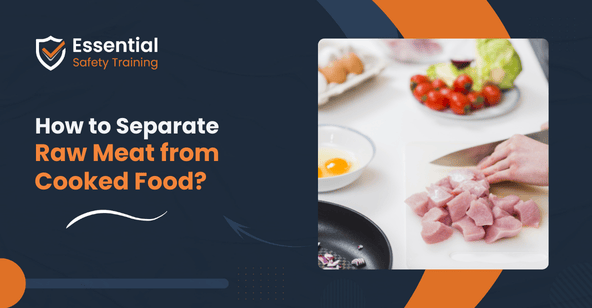
Food safety is a major concern for everyone. According to the FSA (Food Standards Agency)’s report, 2.4 million cases of foodborne illnesses were reported in the UK. It caused 180 deaths and £9.1 billion loss in societal costs annually. Cross-contamination is a significant cause of that.
How do you keep raw meat separate from food already cooking? This is something we should consider when avoiding cross-contamination. Cross-contamination is a leading cause of foodborne illness in the UK, often involving the transfer of bacteria like E. coli. The bacteria get transferred mostly from raw foods to ready-to-eat foods.

Here, we will help you prevent cross-contamination and provide the correct methods for preparing, handling, and storing raw and cooked foods appropriately. Let’s explore!
What is Cross-contamination?
Cross-contamination is the transmission of bacteria, viruses, or allergens to ready-to-eat food by raw foods, surfaces, or hands. It is a significant form of food safety issue that leads to severe health complications such as food poisoning, food allergies and other food-borne diseases.
Storing and preparing raw foods with cooked foods can cause cross-contamination. To maintain food safety, it is necessary to store raw meat separately from ready-to-eat foods.
4 types of Contamination
The 4 types of food contamination include microbial, chemical, physical, and allergenic contamination. These contaminations have a major economic and environmental impact through loss of productivity, food insecurity, and health issues.
Level 1 Food Hygiene and Safety
Learn the basics of food hygiene and safety for safe food handling, preparing, and storing.
Enrol Now
Biological Contamination
It happens due to the presence of dangerous bacteria, viruses, pathogens, mould, fungi, toxins or parasites in your food. It is considered the primary cause of foodborne diseases in the UK and is also known as microbial contamination
Raw foods, undercooked meat or any other raw meat product harbour bacteria like E. coli, Salmonella, Campylobacter, etc. Harmful microorganisms are also present in other raw foods such as fish, shellfish and many seafoods. These microorganisms feed on food-poisoning organisms, and they cause harm to us when consumed without food processing.
Chemical Contamination
Chemical contamination occurs when food is contaminated by dangerous chemical elements. Preservatives are among the chemicals that we utilise to increase the shelf life of our food, even when they have adverse effects on our health.
Food contamination can also occur when preparing, handling, or storing the food on a surface with chemical residues. The health and safety regulations of the UK ought to restrict the use of such preservatives and food additives and ensure public health.
Physical Contamination
Physical contamination happens when your food gets exposed to foreign objects. It may occur at any point of food preparation, handling or delivery process and can lead to serious health dangers. Choking on food, swallowing harmful objects, or facing any other food-related hazards are examples of physical food contamination.
You may find physical contaminants, like. hair, pest bodies, bones, stones, plastic, fragments of objects, etc in your food. It poses both a short-term and a long-term danger to your health.
Allergenic Contamination
The health risks brought about by food allergens are quite numerous, including allergies, infections, respiratory diseases and so on. It also has health-related long-term risks, such as chronic illnesses like cancer, organ failures, etc.
Food Allergen Awareness
Ensure food hygiene and safety compliance with our Food Allergen Awareness course.
Enrol Now
The training on food allergen awareness will assist you in getting to know about food allergens and effective methods of preventing them. Food labelling is a good strategy that will improve cross-contamination prevention and food-related diseases and risks.
What happens when you don’t separate raw and cooked food?
Foodborne illnesses are usually caused by cross-contamination through the transfer of bacteria such as Salmonella, Campylobacter, E. coli, and Listeria. It transfers bacteria from raw meats, poultry, or soil to ready-to-eat foods, surfaces, or hands.
These pathogens cause severe health issues. Some of the common symptoms that appear within 1–36 hours of ingestion are,
- Diarrhoea,
- Vomiting,
- Fever,
- Abdominal cramps.
- Headaches, and
- Allergies.
These symptoms can last for 7 days, sometimes with high fever (38°C or above) and stomach pain. Cross-contamination causes food poisoning and other food allergies from allergen-containing foods. Having allergenic foods with non-allergenic foods can cause severe food allergies, rashes, skin irritation, and other health issues.
Cross-contamination happens due to the following reasons:
- The same chopping board and knife are used to cut raw and ready-to-eat foods.
- Washing food in the handwash basin or putting dirty dishes and equipment.
- Keeping food uncovered or on the ground floor of the fridge or the freezer.
- Covering raw food with ready-to-eat food.
- Wiping benches, cutlery and tables with cloths that are reused.
- It is to use a towel to dry hands, and clean equipment, utensils, or dishes.
How Do You Keep Raw Meat Separate From Food Already Cooking? A Step-by-step Guide

Here, we will help you follow a simple step-by-step guide to keep raw meat and other raw food products separate from cooked foods. Let’s take a look at them!
Step 1: Safe storage methods
Preferably, raw and ready-to-eat food should be stored in different fridges, freezers and display units. In case they belong to the same unit, store raw meat, poultry, fish and eggs below ready-to-eat food. Fruits and vegetables should be on top of raw meat and should not be stored together with prepared foods.
Step 2: Separation
Strict isolation of raw and ready-to-eat foods with their own storage spaces, fridges and, in case it is available, their own preparation space. It is also essential to use separate utensils for raw meat and cooked foods.
When it comes to using separate utensils, separate cutting boards for cutting raw meat and vegetables, knives, and boiling pans are crucial.
Step 3: Colour-Coding
Assigning chopping boards and knives of various colours (for example, red to raw meat, green to salads, etc.). You can also use the colour coding methods when storing ingredients, red for spices, yellow for turmeric, and so on.
Food labelling helps prevent allergenic ingredients from getting mixed up with non-allergenic ingredients. It’s an effective method for preventing food allergies.
Step 4: Cleaning and Disinfection
Cleaning the kitchen surfaces and utensils with water, soap, and an appropriate amount of cleaning chemicals is necessary. A two-step cleaning procedure (cleaning to remove the grease, and disinfection to kill the bacteria) is recommended here.
You also have to make sure the cleaning chemicals or products do not contaminate your food. Handling food with caution can help you with this.
Step 5: HACCP Plans
Food business organisations should possess a written Hazard Analysis and Critical Control Point (HACCP) system to detect and control these risks. Having a Food Safety Management System (FSMS) in all the food businesses across the UK is a must.
The HACCP will help you ensure food safety, and you can learn more about HACCP, its importance in food safety, its verification procedures, etc.
Step 6: Training
Level 2 Food Hygiene and Safety
Ensure compliance and food safety with our Level 2 Food Hygiene and Safety course.
Enrol Now
Food hygiene training should be given to the staff to know how bacteria can be prevented. Every employee, manager, and those working in the food industry must follow the food safety guidelines.
Besides following the regulations of health and hygiene, you can also enrol in online training course programs. It would assist you in acquiring the necessary skills that would enable you to handle and process food safely.
Preventing Cross-contamination: What to do?
When it comes to preventing cross-contamination, particular care is necessary. Along with safe storage methods to store raw meat, poultry and fish, separated from ready-to-eat food, including salad, fruit and bread, we can also implement some other preventive measures.
Let’s understand what we should do when it comes to avoiding cross-contamination and ensuring our food safety!
Wash your hands before preparing food
You should always wash your hands before and after cooking the food, as even small portions of contaminants may adhere to your hands. They are best washed away with soap and warm water, or you can replace the gloves when you are preparing food with them.
Wash surfaces and use safe cleaning materials
The second step in preventing cross-contamination is cleaning surfaces. Washing of counters, stove and sink can be done using soap and water or cleaning products. Whenever you are applying cleaning products, watch the ingredient list and make sure that it does not include any of the harmful substances.
Wash equipment and utensils

Although it can be effective to wash some utensils to get rid of bacteria, germs, or allergens, it is not always effective. We suggest owning different types of toasters, cutting boards, pans, and other utensils that will prevent contaminants from transferring.
It is of particular concern for appliances like a toaster, where even minor quantities of contaminants may stick on the grill.
Make allergen-free food
When cooking your meal, making allergen-free food is the first priority. This will assist in the reduction of cross-contamination risk. After eating, it is better to keep the food in an inaccessible place that is not exposed to contaminants.
Covering them with lids and storing them safely will help in this case.
Store ingredients properly
When storing the food products in other containers other than their original packaging, it is important to remember that you should stick the ingredient labels with their corresponding containers so that you can recheck the labels later in case of need.
Another tip we would suggest is to store the allergen-free products in the top shelves, so they do not fall and spill on the allergen-free foods.
Frequently Asked Questions (FAQs)
Is it okay to cook raw meat and vegetables together?
Yes, you can cook raw meat with vegetables, maintaining the correct temperature, time, and cooking procedure. As long as the meat gets to an appropriate internal temperature to eliminate bacteria and the veggies are not overcooked, it is safe.
Is it okay to put hot food in the fridge immediately?
Yes, it is possible to put hot food in the fridge, though you should not put piping hot food in the fridge. Piping hot food can raise the fridge’s internal temperature and can spoil other foods as well.
What are the 4 C’s of food safety?
The 4 Cs of food safety are Cleaning, Cooking, Chilling, and Cross-Contamination (or Separation). This framework was developed to avoid food-borne diseases or any other food-related hazards.
Conclusion
Healthy, safe, and nutritious food is everyone’s priority for their physical and overall well-being. Meanwhile, common concerns regarding food safety arise every now and then. Among them, how do you keep raw meat separate from food already cooking is a significant concern.
Cross-contamination that happens due to a lack of food safety and hygiene poses a severe threat to our health. For that, all food businesses across the UK must comply with the food hygiene and safety regulations strictly to keep their consumers healthy and protect them from foodborne illnesses.
The use of separate utensils, containers, and other equipment when preparing, handling, and storing raw food and cooked foods can prevent food poisoning, foodborne illnesses, or any other food-related hazards.
Essential Safety Training

At Essential Safety Training, we deliver a blend of online courses on safety and compliance. As a top-notch award-winning platform in the UK, we value learners and keep our commitment by creating more accessible, expertly crafted courses.