 Food Hygiene

 Free CPD Certificate on Completion

 Fire Safety
No products in the basket.


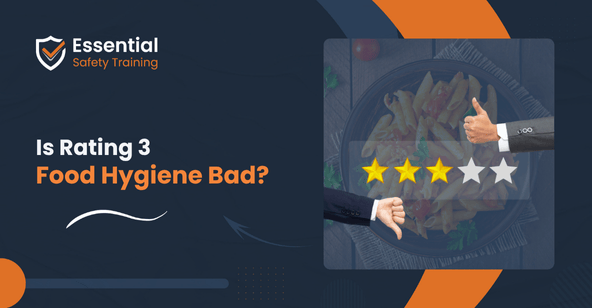
If you consider dining at a place, you’ll find food hygiene ratings displayed on their door. Food hygiene ratings are essential for protecting public health during meals. The ratings for food hygiene may seem unclear. Seeing a ‘3’ on the door of your favourite restaurant might make you pause. Is it safe to eat there?
So, Is Food hygiene rating 3 bad? No, it indicates hygiene standards are generally good or satisfactory.
Today, in this blog post, we will explain what a food hygiene rating of 3 means and why it is not as scary as it may sound, but we also need to consider some points if we find it in our favourite restaurants.
Let’s look at reality and find out what this rating actually says so you can make the right decision on your next journey to a restaurant.

What is a food hygiene rating?
The food hygiene rating entails the standard of cleanliness and safe practices of business in the United Kingdom. It is a graded mark provided to the food business after its inspection by the concerned local authority in the UK. The Food Hygiene Rating Scheme (FHRS) contains it. This FHRS is coordinated by the Food Standards Agency (FSA) in conjunction with local authorities.
Food hygiene rating is a numerical tool that describes the hygiene condition in a business. This tool helps people to decide where to eat or shop for food by giving them hygiene insight. These ratings give general people a clear idea about hygiene issues in a business.
Why Do businesses receive a 3 rating?
A food business might receive a rating of 3 for several reasons. Minor Issues may cause these reasons to range from relatively minor problems to more systemic problems. You can make an informed decision about whether to dine at a restaurant by understanding these factors.
There are many reasons why a business might receive a 3 rating. Some of them are:
Minor Structural Issues
Minor structural issues within the establishment can become one of the reasons for rating 3. This could involve cracked tiles on the kitchen floor, chipped paint on the walls, or worn-out surfaces. These issues don’t directly impact the safety of the food being served. But they can contribute to a less-than-ideal environment for food preparation.
Documentation and Record-Keeping Problems
Poor documentation or record-keeping may become another reason for which a business might receive a rating of 3. Health inspectors often mandate that businesses maintain detailed records of cleaning schedules. They also mandate businesses to maintain food storage temperatures and pest control. A lower rating can result if these records are incomplete or outdated.
Inconsistent Food Handling Practices
A rating of 3 sometimes reflects inconsistent food handling practices. For example, staff may know proper procedures but may not consistently follow them. This might involve actions such as not washing your hands between handling raw and cooked food or not monitoring the refrigerator temperature as you should.
Investing in Staff Training
Staff training is essential for maintaining good hygiene practices. Businesses should regularly train their staff to ensure that all employees are familiar with the latest food safety procedures. This training can help prevent issues related to inconsistent food handling. This training can also contribute to a higher rating during the next inspection.
Regular Independent Inspections
Some businesses opt to perform regular independent inspections to uncover potential problems before the official health inspection. Conducting these independent inspections enables businesses to proactively address any issues. These inspections also guarantee that they consistently uphold high hygiene standards.
Comparing a food hygiene rating of 3 to other ratings
People tend to assume rating 3 is dangerous because it’s close to 2 or 1. People think this way because ratings 2 and 1 are quite concerning, and rating 3 is quite close. It’s important to note that three still comply with food safety laws.
Rating 3 vs. Rating 2
A rating of 2 indicates that the business has not fulfilled all the essential standards and must undergo major upgrades. If a business complies with essential standards but has several areas for improvement, it implies a rating of 3.
The intensity and reach of the problems define their distinction. A company rating of 2 raises alarm about vital challenges that can endanger food safety. While a 3 indicates minor problems compared to the rating 2.
Rating 3 vs. Rating 4
A rating of 4 implies that the business performs well with only small issues. The jump from three to four might seem small, but it involves lots of things. It usually involves tightening up procedures, improving documentation and addressing minor structural issues. A rating of three means a business is doing ok. A rating of four means they’re going above and beyond the basics to ensure good hygiene.
Hygiene food ratings

The rating scale typically ranges in numerical order from 0 to 5. Each number represents a specific level of compliance with food hygiene standards:
Rating 5- Very good
This business complies with the greatest requirements for food safety and hygiene. Every sector we looked at, from food to cleanliness and management, is of the highest quality. This rating indicates that the business fully complies with food hygiene regulations.
Rating 4- Good
This rating indicates that the business maintains a high level of hygiene. It also represents that the business has only minor issues that need to be quickly addressed.
Rating 3- Generally satisfactory
This rating implies that the business meets the minimum legal standards for food hygiene. It also implies that there may be areas that need improvement.
Rating 2- Improvement necessary
This rating shows the business falls short of some key hygiene standards. It also says that the business needs to make changes to meet the requirements.
Rating 1- Major improvement necessary
This rating indicates that there are significant hygiene issues that pose a risk to public health. It also indicates immediate actions must be taken to mitigate this risk to public health.
Rating 0- Urgent Improvement Necessary
This rating implies that the business has serious hygiene issues that need urgent attention. It’s rare, but a rating of 0 indicates that the establishment is in a dire state.
How are food hygiene ratings established?

Health department inspectors who go to food establishments usually establish food hygiene ratings. Inspections made by them remain unannounced. It’s done for not letting business clean up before arrival for inspection. This action by the inspectors ensures that food businesses maintain high standards of food hygiene at all times.
Inspectors check different areas to determine the final rating:
Food handling practices
The way food is made, cooked, chilled and preserved is part of this. The inspector focuses on whether the handling of food rules out contamination.
Cleanliness of facilities
The inspector evaluates the overall tidiness of the establishment. It includes the kitchen, dining areas, and storage spaces. They authenticate that staff members are adhering to their cleaning schedule and have skill in cleaning methods.
Food storage
Inadequate food storage can be one of the leading causes of cross-contamination. Inspectors ensure food is preserved at the right temperature. They also make sure that raw and cooked food are apart from each other.
Pest control
Worrying pests like rodents, flies or cockroaches is a real issue. Inspectors look for evidence of pest issues as well as assess if companies have appropriate pest control actions in effect.
Structural integrity
Evaluation of the physical condition of the building is part of the process. Seeking out problems such as broken tiles, leaky pipes, or deficient ventilation is important. They all may affect hygiene. This assessment of the environment helps assure that it meets the health standards.
Management practices
The inspector looks into the management of the business with regard to food safety, evaluating staff, training and the way records are kept. The officer checks if the business has appropriate procedures to ensure food safety and if the staff are trained in food hygiene practices.
Is food hygiene rating 3 bad?
When you see a food hygiene rating of 3, you may think that it may be unsafe. But it’s not. It’s good for consumption but not very magnificent.
A food rating of 3 means that the business meets the minimum legal standards for food hygiene. It can be said that it’s not bad and also it’s not outstanding either. The ‘Generally Satisfactory’ term is used to describe this rating. It’s because there are usually areas where the business can improve while the business complies with the law.
Should you be concerned about eating at a place with a rating of 3?

Now that you understand what a rating of 3 means. You must consider whether you should be worried about eating in a place with such a rating. The answer will vary based on several factors. Your personal comfort level, the type of establishment, and any additional information you can gather about the business included in these factors.
Personal comfort level
When deciding whether to eat at a place with a 3 rating, your comfort level plays a crucial role. If you prioritise top-notch hygiene, you may prefer sticking to places with ratings of 4 or 5. If you are okay with generally satisfied hygiene, a rating of 3 might not discourage you.
Type of establishment
The type of food establishment also matters. For example, a fast-food restaurant might receive a 3 rating due to the quick turnover of food. A restaurant might also receive a rating of 3 star due to the high volume of customers. These factors can make it harder to maintain a spotless environment at all times.
A good restaurant with a rating of 3 will have more concerts. It is because the standards will be higher in terms of price and regulations.
Frequency of visits
If you are a regular at a restaurant with a 3 rating and have never encountered any issues, you may feel confident dining there. If you’ve never visited a 3 rating restaurant before, you might proceed with caution. You might do a bit more research before making a decision.
Frequently Asked Questions
Is a food hygiene rating of 3 okay?
With a rating of 3, the business satisfies essential hygiene standards. There exist areas for enhancement in food safety and cleanliness practices.
What does Level 3 food hygiene cover?
Level 3 food hygiene training covers advanced food safety practices for supervisors, managers, and business owners in food establishments. The program focuses on overseeing food safety procedures and identifying threats while guaranteeing appropriate hygiene practices for all employees.
Do I need level 2 or 3 food hygiene?
If you cook or handle food in a kitchen or café, then Level 2 food hygiene training is necessary. Having Level 3 is necessary if you lead or oversee food safety at your employer.
Is food hygiene rating 4 ok?
An approval of 4 for food hygiene reveals that the operation follows excellent hygiene practices. While close to a perfect score, the establishment needs to tweak in particular areas.
Conclusion
So, Is food hygiene rating 3 bad? No, it’s not. It means the restaurant follows all the compulsory food laws but has minor issues that need improvement.
Concerning about three food hygiene ratings is unnecessary. A rating of 3 means that the business complies with necessary food safety legal norms. However, there may be certain areas for further improvement.
It is your decision whether to dine there; however, a rating of 3 does not guarantee safety. By conducting simple research and using your sense of judgment, you can determine if a restaurant rated three is suitable for you.
Essential Safety Training

At Essential Safety Training, we deliver a blend of online courses on safety and compliance. As a top-notch award-winning platform in the UK, we value learners and keep our commitment by creating more accessible, expertly crafted courses.