 Food Hygiene

 Free CPD Certificate on Completion

 Fire Safety
No products in the basket.


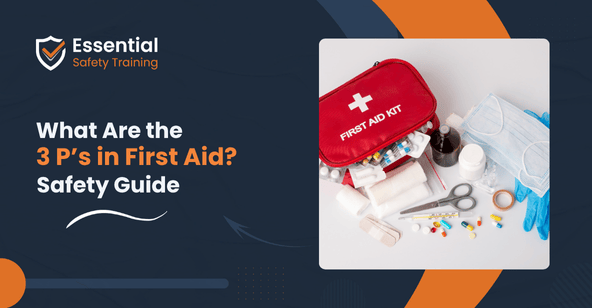
When it comes to first aid, the concept of the 3 P’s in first aid forms the foundation of adequate care. These pillars ensure that the care remains effective and safe.
What are the 3 P’s in first aid? The 3 Ps of first aid refer to Preserve, Prevent, and Promote. These principles guide every action a first-aider takes during an emergency. These principles simplify the emergency first aid process for the first aider in a stressful situation.
This detailed guide will walk you through each of the 3 P’s. Whether you’re a seasoned first aider or an expert seeking deeper insights, this article is tailored only for you.
3 P’s of first aid

The 3 P’s ensure a structured approach to first aid. These principles remain universal even if the emergencies vary. 3 P’s for first aid abbreviates to Preserve, Prevent and Promote. Let’s explore each one in-depth:
Preserve life
The first ‘P’ shifts the primary goal to immediate medical care. Preservation focuses on keeping the injured person alive until professional help arrives. It involves maintaining vital functions and further worsening their condition.
This principle requires you to stay calm and prioritise critical interventions. It also requires you to apply advanced techniques when necessary.
Core techniques for preserving life
- Ensure an open airway
- If the casualty remains unresponsive, check their airway first. Use the head tilt and chin lift method to prevent the tongue from blocking the throat.
- If the casualty suffers from a potential spinal injury, then you should be careful. Use the jaw-thrust technique to minimise neck movement.
- Checking breathing and pulse
- After checking the casualty’s breathing, if they do not breathe properly. Then, begin rescue breathing or CPR immediately.
- Check for a pulse by feeling the carotid artery in the neck. No pulse indicates the need for chest compressions.
- Perform CPR (Cardiopulmonary resuscitation)
- For adults, deliver compressions at a depth of 2 inches. Make sure to maintain a date of 100-120 compressions per minute.
- If you’re a CPR instructor, combine chest compressions with rescue breaths at a ratio of 30:2. After 30 compressions, open the airway again, using a head tilt and chin lift. Blow steadily into the mouth whilst watching for the chest to rise, taking about 1 second as in normal breathing. If you’re untrained or unable to give rescue breath, give chest compressions only CPR at a rate of 100-120 compressions per minute
- Use AED (Automated External Defibrillator) if available. AED can significantly improve survival rates during cardiac arrest. As soon as the AED turns on, attach the electrode pads to the victims to the victim’s bare chest. Follow visual and spoken directions given by the Automated External Defibrillator. Then, immediately resume CPR and continue directed by the AED.
- Use basic life support to ensure proper CPR and effective usage of AED. Follow the proper institutions to ensure basic life support.
- Control severe bleeding

- Apply firm, direct pressure to the wound with a clean cloth or dressing.
- Use additional dressings or a pressure bandage if bleeding continues. You may apply a tourniquet above the wound to stop the bleeding. This tourniquet is used to stop the bleeding if necessary.
- Handle choking
- You should perform the Heimlich Manoeuver for choking casualty. Those first aiders providing Heimlich Manoeuver apply it to conscious choking persons.
- You need to begin chest compressions if the person remains unconscious. First aiders give chest compressions to dislodge the obstruction.
Advanced considerations for preservation
Advanced first aid training involves using airway adjuncts like oropharyngeal or nasopharyngeal airways, administering oxygen when available and recognising signs of internal injuries (e.g. rigid abdomen, severe bruising). These skills require specialised knowledge. This specialised knowledge ensures enhanced care.
Prevent deterioration
The second ‘P’ prioritises getting the casualty’s condition under control. You must maintain vital functions, improve the emergency situation as soon as possible and stabilise that situation to the maximum in order to prevent deterioration. This proactive approach reduces the risk and ensures the best possible outcome for the person in care.
Core actions to prevent deterioration
- Monitor vital signs
- Continuously assess the casualty’s breathing, pulse, and level of consciousness. Record any changes to rely on emergency services upon arrival.
- Position the casualty appropriately
- If you see the unconscious casualty breathing, then you need to put them in the recovery position. Putting them in the recovery position ensures an open airway and prevents choking.
- Avoid moving casualties if they’re suspected of spinal injuries.
- For casualties in shock, lay them flat and elevate their legs to improve circulation.
- Immobilise fractures or sprains
- Splints or improvised materials can be used to immobilise the injured area. The splints can be secured with bandages. Make sure that the bandages are not tied too tight to cut off circulation.
- Casualties suffering from spinal injuries should be kept as still as possible. You need to stabilise their neck if you’re trained.
- Treat for shock
- Shock occurs when the body fails to deliver adequate blood flow to vital organs. When shock occurs in an injured person’s body, some signs become visible. These signs include pale, clammy skin, rapid breathing, confusion, etc.
- Ensure that the casualty remains warm. To keep them warm, cover them with a blanket. After warming them, elevate their legs lightly. While doing that, encourage them to remain still.
- Prevent infection
- Cleaning open wounds with water or antiseptic cream, if available. Covering it with sterile dressing also greatly reduces the risk of infection.
Promote recovery
The final ‘P’ focuses on helping them recover as fully and quickly as possible. To ensure such recovery, secondary injuries must be addressed, discomfort minimised, and the casualty prepared for professional care.
Steps to promote recovery
- Provide emotional support
- You need to reassure the casualty. You need to speak to them calmly and explain your actions. Fear and anxiety can worsen the condition. So, you need to maintain a confident attitude to deal with the casualty.
- You need to let them know help is on the way. You also need to encourage them to stay still until the help arrives.
- Stabilise and support injuries
- You need to immobilise the fractures by using splints or slings. You also need to make sure that the splint is secured but not too tight to restrict the blood flow.
- You need to monitor the delayed symptoms such as confusion, dizziness or vomiting. If you see such symptoms, then the casualty is inflicted with a head injury. You need to advise the casualty to seek medical evaluation even if they feel fine initially.
- Clean and dress wounds
- To remove debris from wounds for minor injuries, water needs to be used. Then you put antiseptic and a sterile dressing on the wound.
- You need to use non-stick dressings for burn treatment. This type of dressings protect the area and also minimise the pain.
- Monitor and document
- Keep track of the casualty’s condition. Note any changes in their breathing, consciousness, or vital signs. Give this information to the professional help when they arrive.
- Recording of the key events needs to be done. Key events such as when the CPR began and when the bleeding was controlled. These records can guide the medical professional.
- Encourage professional follow up
- Even if the injury seems small, you should advise the casualty to seek further care. Infections or internal injuries may not seem immediately apparent. But they can create complications later on.
- You should share any noticeable signs with family members or caregivers to ensure effective care.
Expert consideration for recovery
Promoting recovery goes beyond injuries. Advanced responders address the psychological impact of emergencies. Grounding exercises or controlled breathing can help calm an anxious casualty. These two techniques improve overall resilience during the recovery process.
Who should learn the 3 P’s in first aid training?

The 3 P’s are the foundation of first aid principles. These are essential for anyone getting a first aid certificate or certified as a first aider. But understanding these principles isn’t just for aspiring first aiders. Various professionals and individuals in specific roles or environments can benefit greatly from learning the 3 P’s. Here’s who should get this knowledge:
- Emergency Responders: Paramedics, EMTs and appointed persons who are often the first on the scene in an emergency.
- Healthcare Workers: Nurses, doctors and other clinical staff who deal with emergencies regularly.
- Workplace Personnel: Employees in high-risk environments such as construction sites or factories should have these life-saving skills.
- Office Teams: First aid knowledge is valuable for any workplace, even in low-risk environments.
- Health Administrators: Executives and managers in healthcare facilities should understand first aid to oversee safety protocols.
The Importance of the 3 P’s in first aid
Imagine if someone collapses in front of you. They breathe unevenly, and their face turns pale; your heart races, and panic threatens. What do you do in such a situation? First aid becomes more than a skill in these critical moments.
The 3 P’s of first aid make this emergency situation easy. These guiding principles of first aid remind us that even in chaos, simple actions can save lives.
When someone’s life hangs in the balance, you should prioritise keeping them alive. Whether by performing CPR or clearing an airway, every second counts.
The first aid step doesn’t require perfection. Instead, it’s an immediate life-saving action. The 3 P’s of first aid make this first aid action simple and easy to remember. The 3 P’s make first aid less complicated.
The 3 P‘s prioritises preserving life at first. This helps the first aider ensure the best medical help and actions at that moment. The 3 P’s also ensure that the injured person’s condition doesn’t worsen. This ensures that the first aider delicately and carefully handles the injured person according to the injury.
The 3 P’s also promote the injured person’s fast recovery. This promotes recovery through activities like providing emotional support, stabilising injuries, cleaning wounds, etc.
So, the 3 P’s of first aid become the cornerstone for saving lives in an easy manner. All life-threatening situations can be handled in a universal manner. These life-threatening situations can also be dealt with confidently and efficiently by the 3 P’s of first aid.
FAQ
What is ABC in first aid?
The ABC in first aid stands for:
-Airway
-Breathing
-Circulation
What is DRABC in first aid?
DRABC in first aid stands for:
-Danger
-Response
-Airway
-Breathing
-Circulation
What are the 3 C’s of safety?
3 C’s of safety stands for:
-Consultation
-Communication
-Collaboration
What are the 3 principles of first aid?
The three principles of first aid are:
-Preserve life
-Prevent deterioration
-Promote recovery
Conclusion
As a first aider, it’s really important to know what are the 3 P’s in first aid. Preserve Life, Prevent Worsening and Promote Recovery- form the backbone of first aid. They provide a simple but powerful framework for managing cries. You can make a life-saving difference by understanding and practising these principles.
Emergency situations require quick thinking and decisive actions. You can approach such situations with confidence using the 3 P’s as your guide. Your actions can save lives if you stay prepared, stay informed and remember.
Essential Safety Training

At Essential Safety Training, we deliver a blend of online courses on safety and compliance. As a top-notch award-winning platform in the UK, we value learners and keep our commitment by creating more accessible, expertly crafted courses.