 Food Hygiene

 Free CPD Certificate on Completion

 Fire Safety
No products in the basket.


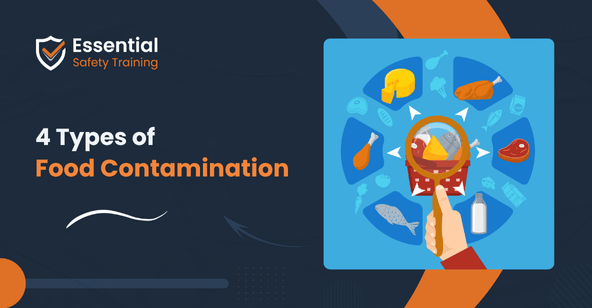
Food contamination can turn a simple meal into your worst nightmare. Every year, millions of people suffer from food contamination in the UK. It is a universal concern that is essential to our health and well-being. It doesn’t matter if you are a home cook, a food industry owner, or if you run a food business, food contamination is one of the biggest global threats.
Safe food is a necessity, not a luxury, for everyone. To ensure safe food, we must know the 4 types of food contamination. Food can be contaminated by physical touch, chemical reaction, biological contamination or allergen exposure.
In this blog, you’ll get a detailed overview of food contamination, its types, how to prevent it, and some examples. Let’s explore it further.
What is food contamination?
Food contamination is when any harmful substance, like bacteria, chemicals, or any other object, can spoil your food quality and lead to illness. From farm to fork-contamintation can occur at any stage of food supply chain.
Contaminants are impossible to detect with the naked eye. Contaminated foods can look, smell and taste similar to good-quality food but carry invisible threats. These microorganisms can lead to food poisoning, injury, or even worse-death. That’s why it is necessary for everyone to understand the concept of food contamination and their types.
What are the four types of food contamination?
Mainly, there are four types of food contamination that can affect our food. They are physical, chemical, microbial, and allergenic. To understand them better, a chart is given below:
| Type of contamination | Description | Source |
| 1. Physical contamination | Occurs when accidentally unwanted objects end up in food | Hair, a piece of glass, metal shards, plastic, nails, stones, wood chips, jewellery |
| 2. Chemical contamination | Occurs when harmful chemicals come into contact with food. | Fertiliser residues, pesticide, cleaningagents, lead, mercury, arsenic, mycotoxins |
| 3 . Microbial contamination | Occurs when harmful microorganisms come into contact with food | Raw fish, meat, and poultry, unwashed products, unpasteurised foods |
| 4. Allergenic contamination | Occurs when all the regen foods accidentally come into contact with food | Peanut, egg, gluten, shellfish, soy, fish,sesame figs |
Physical contamination
When unwanted items like hair, nails, wood chips, or any other inedible object come into contact with food. It is not only an unpleasant incident, but also it can cause choking, dental damage, or internal injury. This type of contamination is easier to spot but difficult to prevent.

Chemical Contamination
Chemical contamination is the most harmful contamination. It is very easy to mix different types of fertiliser residues and pesticides into our food. Also, if foods are not stored in a proper container, they can be contaminated chemically. A minimal amount of chemicals can be life-threatening if consumed regularly.

Microbial contamination
This type of contamination is caused by bacteria, viruses, mould and parasites. Most people face microbial contamination. You can not see or smell this type of contamination. So it is very hard to identify whether foods are contaminated or not. Microbial contamination occur from raw meat, unwashed vegetables, or poor hygiene during food handling and this leads to food poisioning.

Allergenic contamination
Allergenic contamination occurs when allergen ingredients are mixed with random foods. Such allergens are- gluten, milk, fig, peant, shellfish etc. People how are allergic to these foods can easily trigger with very little amounts of allergen foods.

How does food become contaminated?
Food can be contaminated in various ways, but the outcome of food contamination is the same: illness. By first identifying how contamination occurs and then taking steps to address those causes, we can significantly reduce the risk of food contamination. The reasons for food contamination are-
- Lack of personal hygiene
- Unsafe food storage
- Uncooking or overheating food
- Insect infestation
- Chemical exposure
- Damage packaging
- Sick or Untrained Food Handlers
How to Prevent Food Contamination
Food contamination is the main cause of foodborne illness. Preventing food contamination is not very difficult to achieve, but consistency is the key here. It’s all about practising safe food handling from start to end. The steps that prevent food contamination are-
✅Practice good personal hygiene- Wash hands thoroughly before and after handling food. Wear clean clothes, and keep your nails short and clean.
✅Clean surface and utensils- Wash work surfaces clean while cooking. Clean chopping board, knives and other utensils with hot and soapy water. Use a separate chopping board for raw meat and ready-to-eat food.
✅Store food at the proper temperature- Separate raw and ready-to-eat food in your refrigerator below 5°C (41°F). Use the fridge thermometer to monitor it.
✅Cook food thoroughly- Foods like meat, fish, and eggs need to reach a safe internal temperature. Proper cooking kills harmful bacteria and parasites that cause foodborne illness.
✅Use safe water and high-quality ingredients- Make sure the ingredients you are using are from reputable sources, check their quality and freshness. Use clean and safe water for cooking. Wash fruits and veggies in running water.
✅Packaging and expiry date- Check expiry dates before buying food and declutter foods without expiry dates. Avoid foods with damaged packaging.
✅Control pests- Regular cleaning and sanitising can help reduce pests in your kitchen. Take proper help from experts to remove pests.
✅Train food handlers- Train your staff in safety practices and personal hygiene to prevent cross-contamination. Educate them about good and let them know the consequences of food contamination.
Food Contamination Examples
Understanding examples of real-life food contamination will help you to know how they occur and why it is dangerous. Here are some common scenarios of four types of food contamination:
Physical food contamination example-
🔸 A piece of metal wire from a cleaning scrub.
🔸Metal staple from a bag that ends up in your food.
🔸Kitchen handler’s ring/any jewellery item slips into food.
🔸Hair from a food handler ends up in food due to not wearing a hairnet.
Chemical Contamination Examples-
🔸Food store in non-food-grade containers.
🔸Accidentally mixing dishwashing soda with salt due to poor labelling.
🔸Not cleaning properly pesticide-treated vegetables/ fruits before cooking.
🔸Using too much food colour or preservative.
Biological Contamination Examples-
🔸Using mouldy bread to make a burger/sandwich
🔸An unwell kitchen handler coughing or sneezing near uncovered food.
🔸Storing meat and milk at a comparatively higher temperature than other food.
🔸Reheating food, not storing it in the refrigerator.
Allergenic contamination Examples-
🔸Using nuts and seeds without knowing whether your consumers are allergic to them.
🔸 Knives used to cut shellfish are also used to cut fruits and vegetables.
🔸Not reading the ingredient list of the spice mixture before cooking.
Direct vs Indirect food contamination
Food can be contaminated both directly and indirectly. Both are harmful to our lives, so it is important to understand the difference between them to take proper preventive steps.
| Characteristic | Direct Food Contamination | Indirect Food Contamination |
| Defination | When food contaminant is introduced to food through direct contact | When a harmful substance orMicroorganisms transferred to food not directly |
| How it occurs | Contaminated object directly touch to food | Can be transferred via cooking equipment utensils |
| Example | Raw food touching cooked food. An insect landing on food, coughing or sneezing on food | Wash hands properly. Separate raw and cooked food |
| Prevention | When a harmful substance is transferred to food not directly | When a harmful substance is transferred to food, not directly |
FAQ
How to avoid toxins in food?
To avoid toxins, you need to wash your food properly and cook it to a safe temperature. Try to avoid ready-to-eat and processed foods. Choose organic food options. Discard mould items, and avoid reheating meals multiple times. Choose trusted suppliers and be cautious with wild plants or mushrooms. These steps reduce exposure to harmful bacteria, chemicals, and natural food toxins.
What food carries the most bacteria?
Raw meat, eggs, fish, seafood, milk, and poultry carry most bacteria. Some vegetables, like raw sprouts, carry harmful pathogens like E.coli.
Does Salmonella cause direct or indirect contamination?
Salmonella is one type of bacteria that is the reason of foodborne illness. It can spread both direct or indirect contamination. This directly contaminates foods in contact with raw meat, egg, fish, etc. Indirectly, it contaminates when contaminated food comes in touch with the cooking surface, utensils and is passed to a ready-to-eat food item.
Conclusion
Food contamination is one of the dangerous issues that the UK is facing. It can lead to many health issues that threaten our lives. So understanding the 4 types of food contamination is very essential to everyone.
To minimise contamination, the steps are very easy to make, but the main challenge is to be consistent with them. Regular food hygiene practice and training will help to minimise it. Cleaning the utensils and cooking tools, wash raw foods before cooking, washing hands before and after cooking, using gloves and a hairnet while cooking are the basic food safety practices. Just following them can make a big difference in food contamination.
Food is the fuel of the human body, so it’s our duty to keep it safe from contamination.
Essential Safety Training

At Essential Safety Training, we deliver a blend of online courses on safety and compliance. As a top-notch award-winning platform in the UK, we value learners and keep our commitment by creating more accessible, expertly crafted courses.