 Food Hygiene

 Free CPD Certificate on Completion

 Fire Safety
No products in the basket.


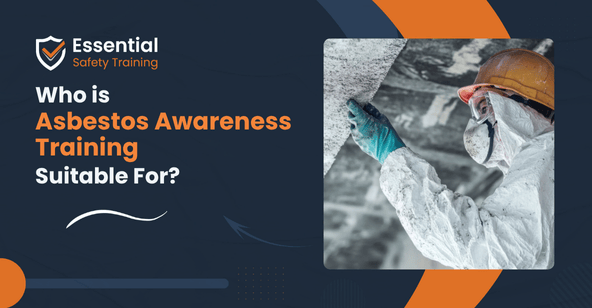
Do you know that every year, 5000 people die due to exposure to asbestos in the UK? Which is higher than the rate of road accidents. Understanding the risk of asbestos in the workplace is very important for everyone, especially those working in construction sites and other industries.
Asbestos awareness training is suitable for workers who encounter asbestos materials daily. This training helps workers to understand how to identify asbestos materials, the risk and how to respond when they come into contact with asbestos materials.
In this blog, you will discuss about how many types of asbestos training are there, licensed and non licensed asbestos training, who needs asbestos training and where you can get asbestos awareness course online.
What is asbestos awareness training?

Asbestos awareness training teaches people about asbestos, its dangers, how to handle it, and how to respond when exposed to it. This training is a legal requirement for people who come into contact with asbestos materials in their jobs.
This legal training is controlled by the Asbestos Regulations 2012. It covers knowledge about asbestos, where it is found, and the risk of asbestos exposure. In the long run, if someone is working with asbestos regularly, it can lead to dangerous health issues. Diseases like lung cancer, Laryngeal cancer, asbestosis, persistent dry cough, chest pain, and diffuse pleural thickening are caused by asbestos.
Asbestos was widely used as a building material from the 1930s to the 1980s. However, in 1980, the use of asbestos decreased notably due to the increasing health crisis. After that, in 1999, all types of asbestos were banned in the UK. So, we can understand the seriousness of asbestos.
Asbestos awareness training is suitable for whom
This asbestos training is suitable for people who come across asbestos material in their work. Even though someone is not directly working with asbestos, they should also enrol in this training. Asbestos training is suitable for
✔ Maintenance officer
✔ Mechanics
✔ Plumbers
✔ Painters
✔ Construction workers
✔ Electricians
✔ Roofing contractor
✔ Carpenters
✔ Ventilation workers
✔ Demolition workers
✔ IT installer
✔ Building surveyors
Even if you are not working in any of these roles, but you have the potential for accidental disturbance of asbestos-containing materials (ACM), you should take this training. It confirms that every individual is well aware of the asbestos substance and how to deal with it.
How many types of asbestos training are there?
Recognising the level of exposure and responsibility, there are mainly three types of asbestos training. They are designed so that workers receive the appropriate level of instruction based on their job tasks. The three types of asbestos training are-
👉🏻Cat A- asbestos awareness training
👉🏻Cat B- non-licensed asbestos training
👉🏻Cat C- licensed asbestos training
Category A: Asbestos Awareness Training
This is a very primary level of training. It is for people who may encounter asbestos at work but won’t disturb it. Suitable for workers like electricians, plumbers, joiners, painters, decorators, maintenance workers. Also people who working in a construction site that was built before 2000 also need this training.
The course duration is typically 4-5 hours. It can be completed as an asbestos awareness course online, which makes it accessible and convenient for individuals and employers alike. Workers are not qualified to do any removal work. They are mainly focused on recognising potential hazards, understanding the risk, and trying to avoid asbestos materials.
Category B: Non-Licensed Asbestos Training
Cat B is also known as non-licensed asbestos training. The workers who work directly with asbestos materials and are involved in disturbing them must take this non-licensed asbestos training. Tasks like drilling, minor asbestos material removal, PPE use, and waste management require workers to do this training.
The course duration is typically a full day, which is 6-7 hours. This course can be done online but often requires in-person training. The main focus of this course is safe work methods, PPE application, hazard evaluation, and waste clearance protocols. People who work as Maintenance workers, Plumbers, Electricians, Construction workers, or Roofer Joiners are suitable for this training.
Cat C- licensed asbestos training
Cat C licensed asbestos is the most crucial and advanced level of training. It is the most refined level of asbestos education. This high-risk task is where asbestos materials release significant quantities of harmful fibers. Tasks like removing sprayed coatings, pipe lagging, and thermal insulation are required for this training.
Cat C licensed training lasted 3 days and required face-to-face training. These asbestos training courses are comprehensive and practical, focusing on the use of RPE and PPE, waste management and disposal, cleaning, and clearance air testing. Workers like maintenance workers, plumbers, or electricians are directly involved in removing asbestos, so there is a high chance of an accident.
Difference between Cat A and Cat B asbestos training
Cat A and B are both training for asbestos awareness, but there are some differences in the training methods. Like course hours, course modules, etc. Some of the main differences between Cat A and Cat B awareness training are given below-
| Features | Category A – Asbestos Awareness | Category B – Non-Licensed Asbestos Awareness |
| Objective | The primary level of training is just to grow awareness in workers and teach them how to avoid exposure. | A bit more advanced level of training. Workers work directly with asbestos materials and do material removal. |
| Suitable for | Anyone who directly handles ACMs | Anyone who directly handles ACMs |
| Tasks involve | No disturbance of asbestos materials | Minor disturbance of asbestos materials |
| Licensing | Not required | NNLW (Notifiable Non-Licensed Work) required |
| Duration of the course | 4-5 hours | 1 day, which is about 6-7 hours |
| Training format | Online training | online or practical training |
Online Asbestos Awareness Training
Health, Safety, and Environment (HSE) approaches, online training is the most effective way to provide training for Category A Asbestos Awareness Training. But it must follow certain guidelines like Regulation 10 of the Control of Asbestos Regulations 2012.
Essential Safety Training provides a high-quality online Asbestos (Category A) Training that is designed to help people build a solid foundation about asbestos safety. It is recognised by accredited bodies in the UK.
Safety measures when working with asbestos

Asbestos is something you can’t see, smell, or taste. But when you inhale it with the air, it can cause serious threats, even death. So you can understand how important it is to ensure the safety measures. Some key safety measures you should take when you are working with asbestos material-
🔶 Wear PPE, gloves, and a face mask.
🔶 Do safe work practices.
🔶 Train workers. Educate them on how to work with exposure.
🔶 Monitor air quality at the workplace. Ensure exposure remains below 0.1 fibres/cm³ (8-hour TWA).
🔶 Dispose of waste safely with labelled containers of ACM.
🔶 Maintain legal regulations.
What to do if exposed to asbestos at work
Asbestos material is very toxic to our bodies. It is so dangerous that even if you have once been exposed to it, it can cause long-term health issues. The steps you should take when you get exposure to asbestos materials are given below-
💢 Stop the work you are doing. It will disturb the ACM and will increase the contamination.
💢 Exit the contaminated place as soon as possible.
💢 Inform supervisors and safety officers immediately.
💢 Shift to a safer and controlled area, then change your clothes. Otherwise, you will spread ACM everywhere.
💢 Seal the area as soon as possible to protect others.
💢 Get medical help. Follow the instructions of the doctor.
FAQ
How many types of asbestos are there?
There are a total 6 types of asbestos available, but mainly they come from 2 different families. They are-
✅ Serpentine asbestos-
1. Chrysotile asbestos
✅ Amphibole asbestos-
2. Amosite asbestos
3. Crocidolite asbestos
4. Anthophyllite asbestos
5. Tremolite asbestos
6. Actinolite asbestos
Can a single exposure to asbestos be harmful?
Asbestos exposure is very harmful; even a single asbestos exposure can be deadly. It can lead you to lung cancer, mesothelioma, etc. Every exposure should be taken seriously because there is no safe level of exposure.
How long does asbestos stay in the air?
Asbestos can stay in the air for hours, even days, if the ventilation system is not proper. Generally, it stays in the air for 48 to 72 hours after being disturbed. As they are tiny, they can recontaminate the place by slight air currents.
Conclusion
Recognising the risk factors of asbestos is the first step in preventing the asbestos crisis in the UK. Taking steps to rise against asbestos can save us from this deadly situation.
Make your workplace safer and better, and there is no alternative to giving asbestos awareness training. Asbestos awareness training is suitable for workers to managers of any organisation where there is risk of exposure.
Understanding the risks of asbestos, asbestos awareness training is unavoidable. So, it is high time if you are someone who is still working in a place with asbestos exposure, contact your supervisor.
Essential Safety Training

At Essential Safety Training, we deliver a blend of online courses on safety and compliance. As a top-notch award-winning platform in the UK, we value learners and keep our commitment by creating more accessible, expertly crafted courses.