 Food Hygiene

 Free CPD Certificate on Completion

 Fire Safety
No products in the basket.


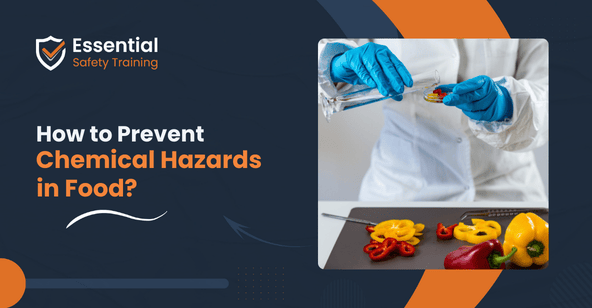
According to a UK report, out of over 3,300 food samples, 1.82% had pesticide residues above Maximum Residue Levels (MRLs) in 2022. The Food Standards Agency (FSA) reported that microplastics and nanomaterials can enter food from packaging, processing, or the environment, and cause harm to our health.
This brings us to wonder how we can prevent such chemical hazards in food, what preventive measures we should implement, and what chemical hazards are commonly found in our food. Chemicals like heavy metals (lead, mercury) and persistent organic pollutants (dioxins) enter the food supply chain from pollution, landfills, and contaminated water.
This biocide pollution in UK rivers raises food safety concerns and calls for immediate action. In this blog, we will help you with a step-by-step guide that is effective for minimising and preventing chemical food hazards.
What is a Chemical Hazard?

When it comes to the food industry, chemicals are being used all the time. Chemicals do not necessarily affect people negatively. It can be dangerous only when used in the wrong manner, mishandled or used excessively, not according to the food safety guidelines.
Any chemical substance that has the capability of harming the consumer is considered a chemical hazard in food. Examples of chemical food hazards are toxins, allergens, food contact materials, cleaning agents, pest control substances, contaminants (environmental, agricultural, and process, such as acrylamide), pesticides, biocides and food additives.
There is a great presence of hazards in the food industry in terms of chemicals. In some cases, biological materials, including the food itself, generate some chemical hazards in response to a defence mechanism.
Types of Chemical Food Hazards
The chemical contaminants may be introduced into food products at any stage of production, be it farming and manufacturing, cooking and cleaning.
The most typical sources of chemical contaminants may be the remnants of some cleaning products, unsafe plastics, pest control products, and equipment maintenance products that may be introduced to the food ingredient or product.
Let’s take a look at some examples of chemical food hazards!
Organic Environmental Pollutants
The organic pollutants, also referred to as persistent organic pollutants (POPs), are chemicals that find their way into food in the environment in which the food is grown or raised. These kinds of chemicals may be detrimental to animals and fish at very high levels.
Pesticides, herbicides, fungicides and fertilisers used in agriculture, heavy metals (lead, mercury and cyanide) found in the earth, and dioxins, usually formed in the animal feed, are examples of environmental chemical hazards.
Acrylamide
Acrylamide is a natural by-product that the body produces when starchy and carbohydrate-containing foods are fried, roasted, baked, grilled or toasted at temperatures of 120 °C or higher. There is no way to escape acrylamide, but its high concentration has been shown to be carcinogenic.
Most foods that are prone to forming high concentrations of acrylamide through the cooking process include potato chips and crisps, bread, breakfast cereals, biscuits and crackers.
Level 2 Food Hygiene and Safety
Ensure compliance and food safety with our Level 2 Food Hygiene and Safety course.
Enrol Now
Cleaning Chemicals
The properties of sanitisers, disinfectants and bleaches are all very detrimental to health. Particularly when they find their way into food and beverages that are consumed.
One can easily imagine how cleaning chemicals that are not properly handled or used may find their way into food products. Particularly when a work surface or a tool is not properly cleaned, rinsed, or stored in a safe manner.
Other points of entry of chemicals in food are during manufacturing, where the lubricants and oils that the machinery in the factories lets out can contaminate the food. Painting and varnishes are also used in the food production section, but the necessary food safety measures have not yet been implemented.
Mycotoxins
These are naturally occurring chemicals, which are produced by some forms of moulds, and when ingested in huge quantities, can be very harmful to consumers. Aflatoxins are the most dangerous, and they can lead to cancer and/or digestive, reproductive or immune system problems.
Mycotoxins may develop on all food and crops in warm and damp environments, but especially in dried food,s including cereals, spices, nuts, dried fruit and coffee. The fact that mycotoxins are natural makes it impossible to eliminate them entirely in foods.
Chemical Food Crime
Food crime in other cases causes the deliberate introduction of chemical contaminants into foods. In the past, the Food Standards Agency has reported instances where food has been intentionally contaminated with the intent of injuring the general population.
There is little food crime involving chemicals, although this remains a factor of great importance in terms of safety, especially among food manufacturers. You can learn more about food contamination from our food safety guide.

What Chemical Hazards Are Commonly Found in Food?
Let’s discover the chemical hazards that are commonly found in food!
- Food additives and preservatives
It has been used in enhancing the quality and shelf-life of products, but also poses a health hazard when taken in large quantities.
- Agricultural chemicals
Remains of the chemicals that were applied to grow crops and vegetables, such as pesticides and fertilisers.
- Overprocessing or temperature abuse of chemicals
Acrylamide and furans.
- Environmental contaminants
Contains soil and water heavy metals.
- Toxins
The toxins of microorganisms and animals (such as marine toxins) are natural.
- Antinutritional chemicals
They are naturally occurring in food (such as glycoalkaloids in potatoes, which are poisonous to humans in large quantities).
- Excessively put chemical residues
Preservative materials, such as sugars, salts, and nitrites, are all chemical substances when used in excess.
Some other examples of chemical hazards commonly found in the food industry are as follows:
- Wall paints
- Dishwashing liquids, hand sanitiser, and soaps
- Coloring agents
- Washing of agents and industrial chemicals in a kitchen.
- Mycotoxins (such as high aflatoxin, ochratoxin A, and fumonisin in peanuts, tree nuts and cereals)
- Algal toxins (such as dinotoxin, ciguatoxin), Marine toxins (such as ciguatoxin and algal toxins)
- Unintentional addition of nitrates.
- Soil lead, mercury and cadmium.
- Exceptional quality of water containing high levels of fluoride.
- Manufacture of machine processing chemicals.
- Metal equipment and packaging material rust.
- Melamine
Level 3 Food Hygiene and Safety
Ensure compliance and protect consumer health with our Level 3 Food Hygiene and Safety course.
Enrol Now
What Are the Risks of Chemical Hazards in Food?
The chemical hazards may be introduced to the body by ingestion, inhalation or skin contact. The effects may vary according to the exposure of a customer or food handler.
When chemicals get absorbed through the skin, the effects may not be as severe as the results of getting into contact with the chemicals by inhalation or ingestion. The outcomes are dependent on the type and the number of chemical hazards in foods, which may cause acute or chronic illnesses.
Common symptoms include the following,
- Nausea,
- Vomiting,
- Allergic reaction,
- Diarrhea,
- Difficulty in breathing or asphyxia,
- Dermatitis as a result of direct contact.
In more severe incidences, exposure to the chemicals may also result in other toxic effects, such as severe allergies or sensitivity to chemicals, cancer, and even birth defects in pregnant women. First-hand contact with large quantities of chemical hazards will require urgent medical treatment.
One indication of the overprocessing of foods also leads to hazardous chemicals in food. When the sugar and protein-rich products are overheated, the chemical substances may turn into by-products (acrylonitrile, acrylonitrile).
This form of food hazard has a long-term impact on the consumers, unlike food hazards through biological hazards. Chemical hazards harm human health when ingested. The role of food handlers is to minimise the risk of the customer being exposed to the chemicals.
How to Prevent Chemical Hazards in Food? Step-by-step Guide
On finding a chemical hazard in food, there are two preventative measures available to a food handler. The former approach applies to food additives that inherently have chemical hazards, as it has been mentioned before.
Food employees should strictly observe the control measures that have been established when dealing with foods that pose high hazards of chemicals. For example, glycoalkaloids, which are toxic elements of potatoes, can be eliminated by peeling, boiling and frying.

The second way of managing foods that are contaminated by harmful chemicals is to retain the food ingredient or food item. The product should be subject to proper chemical hazard analysis to establish whether plausible reasons, such as the concentration of the current hazard, are not safe to consume.
Let’s take a look at the ways to prevent chemical hazards in food through our step-by-step guide!
Step 1: Storage and Handling
- Keep away all cleaning chemicals, sanitisers and lubricants in areas other than food preparation, storage and service.
- Do not use food containers to store chemicals and vice versa.
- Chemical containers should be properly labelled.
- Store chemicals in a place of lockup.
Step 2: Cleaning and Sanitation
- Wash surfaces that come into contact with food only with food-grade, non-toxic, and non-tainting chemicals.
- Use chemicals diluted as per the instructions of the manufacturers.
- Use a clean as you go policy to eliminate the accumulation of chemical residues.
- Cover food while cleaning the same place.
Step 3: Preparation and Processing of Food
- Comprehensively wash fruits, vegetables and salads to eliminate the pesticides.
- Starchy food should not be overheated or burnt to minimise the development of chemical hazards such as acrylamide.
- Keep equipment clean so that there are no lubricant spillages or to ensure that there are no loose metal pieces that may pollute food.
Step 4: Pest Control
- Hire the services of a professional and registered pest control company.
- Make sure that pesticides or chemicals which are used in pest control are in storage places and do not come into contact with food and food surfaces where they can be used.
Step 5: Training and Management
- Train employees on how to recognise chemical hazards and procedures for handling chemicals safely.
- Wear the correct personal protective equipment (PPE) when dealing with chemicals and food safety hazards.
- Any food contaminated by chemicals accidentally should be disposed of immediately. Every employee should follow the food safety practices.
Complete Food Hygiene and Safety Bundle
Learn all the essential Food Safety Guidelines with our complete Food Hygiene & Safety bundle.
Enrol Now
HACCP in preventing chemical food hazards
To avoid chemical food hazards, HACCP (Hazard Analysis and Critical Control Point) is used to identify, monitor and control chemical hazards at particular, critical points in food production, such as cleaning agents, pesticides, allergens, etc.
It sets, controls and checks safe levels of such hazards, ensuring safe and healthy food. The important areas of HACCP in the prevention of chemical hazards include the following,
Hazard Analysis
The presence of possible chemical contaminants (such as cleaning chemicals, lubricants, allergens, pesticides) in raw material or in the course of processing.
- Critical Control Points (CCP)
This is the creation of a control point (such as a point of inspection of ingredients, approval of vendors, application of chemicals in cleaning, etc.) to regulate risk.
- Critical Limits
Establishing quantifiable levels of chemical risks (such as no residue of a sanitising agent on surfaces, etc).
- Observation/Remedial Measures
The periodic monitoring of the functionality of the controls and an immediate response to the violation of a chemical limit (such as the disposal of contaminated food).
- Prerequisite Programs
A basic practice, such as proper storage of cleaning chemicals, staff training, and cleanliness, keeping chemicals out of food, and securely storing them, should be implemented.
Examples of Chemical Hazard Control

Some examples of chemical hazard control are,
- Cleaning Chemicals
The chemicals must be certified, applied at the right concentration, and they should not be stored together with food.
- Allergens
Proper labelling of products and avoiding cross-contact of products in manufacturing.
- Raw Materials
Supplier, certification, and testing can be used to control the presence of contaminants such as pesticides or heavy metals.
You can also learn more about the HACCP verification procedures and how you can implement them in your food business.
Frequently Asked Questions (FAQs)
What are the 4 main hazards?
There are four primary categories of hazards typically applied in workplace safety and health, which include Chemical, Biological, Physical and Ergonomic. For example, toxic substances (Chemical), bacteria (Biological), noise (Physical) and poor workstation design (Ergonomic) can be the four health hazards.
What are chemical hazards in the kitchen?
Most of these products, like the soaps, cleansers, degreasers and sanitisers, include dangerous chemicals that can impact our health negatively. These products are commonly used in the kitchen to clean. The residues of these in food substances can cause serious health issues.
Which is an example of a chemical food hazard?
Another example of naturally occurring chemical food hazards includes toxins produced by certain species of fish and shellfish, as well as mushrooms. They are known as natural toxins.
Conclusion
Chemicals in food used improperly or in excessive amounts convert safe food additives into hazardous substances. The prevention strategies of dealing with chemical hazards in food are associated with a high level of monitoring, proper food handling techniques and effective control measures.
Food processing techniques can ensure food safety, as there are chemical hazards which are present naturally and can be removed by proper food processing. When it comes to handling food, making sure that all food contact surfaces are safe to prevent contamination is essential.
Food safety compliance demands that all chemicals used in food be printed on the label to prevent accidental risks. All food businesses across the UK have a legal and mandatory requirement to comply with the UK Food Safety Laws.
Essential Safety Training

At Essential Safety Training, we deliver a blend of online courses on safety and compliance. As a top-notch award-winning platform in the UK, we value learners and keep our commitment by creating more accessible, expertly crafted courses.