 Food Hygiene

 Free CPD Certificate on Completion

 Fire Safety
No products in the basket.


Despite the Construction Design and Management (CDM) regulations, the UK construction industry still experiences high accident rates. Falls from height, being the top cause of fatalities (around 30-50% of deaths) in the UK, followed by being struck by objects and manual handling issues.
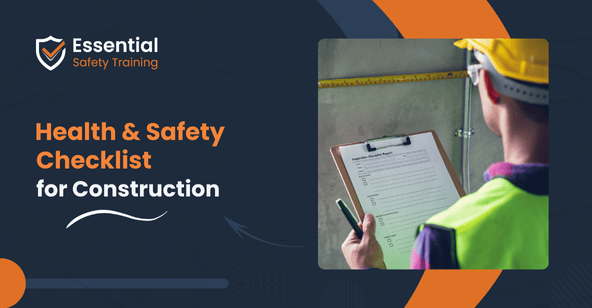
This brings us to a major concern: how can we ensure our health and safety in construction sites? What is the health and safety checklist for construction site, and how can you implement it effectively? Health and Safety have always been a matter of great emphasis, especially for on-site work.

In this blog, we will help you explore the checklist for ensuring health and safety in construction work. You can also gain helpful insights with us to maintain a proper health and safety management system at work. Learn more.
What Is Health & Safety on a Construction Site?
Health and safety on a construction site are of paramount importance to work safety on sites. About 138 cases of workers’ deaths were reported by the Health and Safety Executive (HSE) between the years 2023 and 2034.
Health and Safety on a construction site refers to the rules, procedures and measures (including PPE, training, risk assessments) to prevent injuries, diseases and deaths by managing and preventing on-site hazards. Construction site hazards, such as working at height, heavy machinery, hazardous materials, lack of adequate maintenance and training, etc.
A health and safety management system ensures that the working environment is safe and productive. It’s also a legal requirement of employers and a collective responsibility of everyone working on-site to maintain construction site safety. It needs constant management and adherence to safety laws to prevent any hazards, accidents, or injuries.
What Is a Health & Safety Checklist for Construction Sites?
A health and safety checklist is a measure that is taken to ensure that the practices of Workplace Health and Safety (WHS) are reinforced and are working effectively. It assists organisations, especially the construction industry, in adhering to safety rules and regulations.
CDM Regulations Training
Learn CDM Regulations to manage risks, meet legal duties, and ensure construction site safety.
Enrol Now
A health and safety checklist in the form of inspections is an effective preventative measure that helps to eliminate any accidents, injuries, and illnesses at construction work. A construction site health and safety checklist includes the following:
- Site Security and Access,
- Personal Protective Equipment (PPE),
- Equipment and Machinery,
- Work at Height,
- Electrical Safety,
- Fire & Excavation Safety,
- Welfare Facilities and
- Emergency Preparedness
This ensures that the pathways are clear and there is proper signage, training and safe practices to prevent falls, injuries and the handling of hazardous substances.
Why Do You Need a Health & Safety Checklist for Construction Sites?
A health and safety checklist has a dual objective:
- One is to respond to the questions to assist employers in carrying out effective inspections to safeguard the employees against possible hazards.
- The other one is to offer the employers an audit of themselves to ensure they adhere to the Occupational Safety and Health (OSH) regulations.
To prevent accidents in advance, you need a health and safety checklist for construction sites, which will potentially protect workers and stop costly shutdowns or fines.
Let’s understand the core reasons why we need a construction site health and safety checklist!
- Proactive Hazard Control
It notifies of the possible hazards (falls, electric problems, malfunctions of equipment) before they could lead to injuries and shifts toward reactive solutions towards proactive prevention.
- Ensures Consistency
It provides a consistent way of checking each day without missing critical safety tasks to ensure that crews and conditions can vary.
- Compliance & Documentation

It assists in satisfying legal needs and demonstrating due diligence by its comprehensive documentation of the inspections, audits and corrections.
- Protection of Workers
It ensures that the wearing of necessary protective equipment (PPE), equipment upkeep and emergency procedures are available and familiarised.
- Maintains a Safety Culture
It promotes frequent safety dialogues (such as toolbox talks) and empowers workers to identify risks to create an atmosphere in which safety is a priority.
- Minimises Risks
It reduces the risks of accidents, delays, reworks, and legal fines, which saves time and money.
Simply put, a checklist is a methodical roadmap that helps to maintain a complicated building setting and keep the construction environment in order and safe.
How to Ensure a Health and Safety Checklist for Construction Site?
The appropriate use of a health and safety inspection checklist for construction sites is to implement the most up-to-date and best practices in case of situations or workplace hazards that would affect lives and livelihoods.
Here, we will explore the essentials that a health and safety checklist must include to ensure construction site safety!
- Site Setup & Access
The first checklist for ensuring health and safety is the site setup and access. It includes the following,
- Site Security
Have fencing, clear access routes for the public, as well as protection against falling materials.
- Proper Signage
Include easy-to-read safety signs (PPE, traffic, warnings) and danger warnings.
- Safe Access
Secure safe access/exit, unimpeded traffic paths, regulated vehicle flow, and sign-in of visitors.
- Waste Clearance
Maintain clean and neat pathways, tidy site, organised storage of materials, and control of rubbish.
- Personal Protective Equipment (PPE)

The regular use of personal protective equipment for everyone working on the site is another crucial checklist for construction site safety. It includes,
- Mandatory items
Have mandatory items like hard hats, high-vis vests, safety boots, gloves, and eye/hearing protection.
- Task-Specific items
Have proper gear for task-specific work, such as a dust respirator, special gloves, etc.
- Maintenance
To help employees understand how to don, keep in repair and report the broken PPE.
- Machinery and Equipment
Every construction site must ensure safe machinery and equipment to prevent any kind of risk or accidents from falls or working at heights. It covers,
- Fall Protection
Include guardrails, safety nets, harnesses, lifelines, and safe anchor points.
- Scaffolding
Make sure the wooden and metal poles are built, tagged and inspected properly.
- Ladders/Mobile Towers
Have ladders or mobile towers in proper condition, usage, and secure positions.
- Holes/Openings
Have enclosed, scribbled and clouded over holes/openings to prevent any fall.
- Electrical Safety
Electrical safety is one of the most essential checklists for every construction work and any other workplace to ensure safety. It includes,
- Electricals
Include 110V power where required, RCD (Residual Current Device), protected cables, and trained operators.
- Machinery
Conduct frequent check-ups, train employees, take precautionary measures, and keep obvious maintenance records.
- LOTO (Lockout/Tagout)
Manage maintenance by the lockout/tag out procedures.
- Fire Safety & Emergency

Proper fire safety management and emergency responses to tackle any hazardous situations on a construction site are of utmost importance. It has the following checklists,
- Fire Safety
Have fire extinguishers, an assembly point of hot work, a fire watch, and permits.
- First Aid
Include proper healthcare facilities, first aid personnel and proper locations.
- Emergency Plan
Make sure the fire, spill, injury and structural failure processes are exchanged with everybody.
- Health & Welfare
A health and safety checklist for construction sites also includes health and welfare facilities, such as
- Welfare Facilities
Include sanitary toilets, hand washing, resting spots, and drinking water.
- Dust/Noise Control
Include dust extraction measures, water suppression, and noise (ear protection) control measures.
- Hazardous Materials Control
Maintain storage, training, disposal and handling of data sheets and documents.
- Adequate Training & Reporting
Health and Safety in Construction
Master construction safety, reduce hazards and ensure compliance with Health and Safety in Construction.
Enrol Now
Adequate training and instructions for everyone working on sites are an essential part of the health and safety checklist. It includes,
- Induction
Have a general safety induction for site personnel.
- Training
Include toolbox talks, training on a particular task, and competency checks for workers and everyone involved in construction work.
- Reporting
Manage an accident, near-miss and unsafe condition reporting system.
- Key Actions
Some other key actions to include in a health and safety checklist can be,
- Regular Inspections
Perform regular checks on a daily, weekly and periodic basis.
- Risk Assessments
Make sure to use site-specific risk assessments and method statements (RAMS).
Frequently Asked Questions (FAQs)
What are the 4 Cs of safety?
The 4 Cs of safety include Communication, Commitment, Competence, and Compliance. It works best for construction sites where proper communication and competency among employers and employees, their commitment to safety, and their compliance with the safety regulations play a vital role.
What are the 4 stages of health and safety?
The four essential stages of a health and safety management system for any industry, particularly for the construction industry, are Plan, Do, Check, and Act. It ensures that the plans are working effectively in reducing and preventing on-site hazards and accidents.
What is the 5S checklist for construction site?
The 5S checklist for a construction site is for managing a safety management system that includes Sort, Set in Order, Shine, Standardise, and Sustain. It’s an effective methodology that leads to a safer and more productive work environment for individuals working on-site.
Conclusion
In construction, health and safety deals with major construction risks such as falls, machinery, and hazards (dust, asbestos), using adequate training, risk assessment, and strict measures with the primary aim of preventing accidents.
A health and safety management system includes a health and safety checklist for construction site. It covers many important aspects like the use of personal protective equipment (PPE), safe practices (manual handling, working at heights), and regulatory compliance (CDM Regulations) to protect everyone working on sites.
Every individual working on-site has legal and practical duties to make sure that the health and safety standards are followed adequately. It is a shared responsibility to ensure health and safety on construction sites where everyone plays their roles efficiently.
Essential Safety Training

At Essential Safety Training, we deliver a blend of online courses on safety and compliance. As a top-notch award-winning platform in the UK, we value learners and keep our commitment by creating more accessible, expertly crafted courses.