 Food Hygiene

 Free CPD Certificate on Completion

 Fire Safety
No products in the basket.


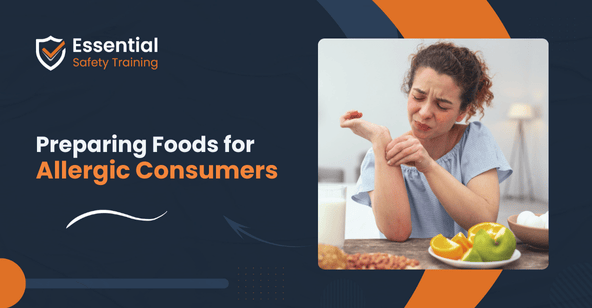
Around 2.4 million people in the UK have a clinically confirmed food allergy. It is estimated that about 1 to 2 per cent of the UK adult population and 5 to 8 per cent of the children are food allergic, although it has been reported that this may be even more.
Food allergy is a common foodborne disease and a major concern in the UK. It brings us to an important question: how do you prepare foods for allergic consumers? Avoiding food allergies, cross-contamination, and any other foodborne diseases in the context of food preparation is a significant issue of food hygiene and safety.
Our step-by-step guide will allow you to find out about the key food allergens, the ways to prevent them, to avoid food-related problems, and other valuable information. Discover more.
What Is a Food Allergen?
A food allergen is a substance, which more commonly is a protein, producing an unsafe immune reaction in an individual with a food allergy. When an individual who has a food allergy takes a food allergen, his or her body reacts by releasing chemicals that are depicted as a danger to health.
According to the Food Standards Agency (FSA), there are legal requirements placed on every food business across the UK to ensure food safety. Compliance with the food safety regulations and including food labelling policy is a must for every food industry.

14 Major Food Allergens in the UK
There are 14 major food allergens in the UK. They are classified into various categories that may generate different food allergies in different people. Food allergy to specific foods varies from one individual to another.
It is part of the law that all food businesses in the UK are supposed to maintain food safety, especially in regard to their allergic consumers. Allergies to certain foods differ with each person.
Let’s take a glance at the 14 major food allergens in the UK!
- Celery
You can be allergic to celery used in celery salt, salads, soups, stock cubes and some meat products.
- Milk
Milk or milk products like butter, cheese, cream, yoghurt, milk powders, or powdered milk used in sauces and soups can cause food allergies.
- Eggs
Young children tend to be allergic to eggs. Eggs sold in mayonnaise, pasta, quiche, sauces, pastries, cakes, mousses, etc., trigger food allergies.
- Fish
People allergic to fish can also be allergic to pizzas, relishes, fish curries, salad dressing, fish sauces, stock cubes, Worcestershire sauce, etc.
- Cereals containing gluten
Wheat, rye, barley and oats, bread, cakes, pastry, etc., contain gluten and can cause allergies.
- Crustaceans
Certain individuals are allergic to crabs, lobster, prawns, Southeast Asian curries, salads, etc.
- Lupin
People also have allergic reactions to any food product that uses lupin, such as bread, flour, pastries, pasta, and seeds.
- Molluscs
Foods like mussels, land snails, squid, whelks, oyster sauce, and fish stews can cause allergic reactions.
- Mustard
Breads, curries, marinades, meat products, salad dressings, sauces, soups, etc., that use mustard can cause allergies.
- Tree nuts
Cashew nuts, almonds, hazelnuts, and nut powders found in biscuits, crackers, desserts, breads, ice cream, nut oils, and sauces are allergens to many people.
- Peanuts
In case of allergy to peanuts, there is also the likelihood of allergy to foods that use peanuts. Peanuts are also used in biscuits, breads, cakes, curries, desserts, groundnut oil, peanut flour and satay sauce.
- Sesame Seeds
Sesame seeds are present in breads, breadsticks, sesame oil, hummus, tahini, salads, and are sprayed on top of the hamburgers or the dishes. Many people have allergies to sesame seeds.
- Soybeans
Soybean is used in curd, edamame beans, miso paste, soya flour or tofu, textured soya protein, meat products, vegetarian products, sauces, desserts, ice-cream, etc.
- Sulphur Dioxide or Sulphites
It is often used in dried fruits like raisins, dried apricots, prunes, meat products, soft drinks, wine, and beer.

Some other common food allergens
Besides these 14 major food allergens, food allergies may be caused by raw foods such as fruits or vegetables. Let’s take a look at them!
- Carrot
Individuals with oral allergies can get an allergic reaction from carrots and other raw fruits and vegetables.
- Avocado
Avocado allergies are associated with tree pollen allergy or with latex allergy.
- Bell Pepper
It can cause respiratory allergic symptoms.
- Potato
Potato allergy can be caused by touching, peeling, or eating potatoes.
- Pumpkin
Pumpkin allergies can be caused by pumpkin skin or seeds.
- Mushroom
Mushroom allergies are also very common and can be found in young people frequently. The symptoms can range from mild to severe.
- Onion
People can have an allergic reaction or intolerance to onions, raw or cooked onions and foods that use onions.
- Spices
Allergies to spices, such as garlic and coriander, are also common.
Why Does Food Allergy Occur?
Food allergies are experienced when the immune system recognises a food protein as threatening. It triggers an allergic reaction quite frequently and presents mild to severe symptoms.
The allergens make the immune system form antibodies referred to as IgE, which, when re-excessively exposed to the allergen, cause the cells to release chemicals like histamine. The effects of food allergies are caused by histamine, and even allergies to the same food may lead to different responses in individuals.
In the worst-case scenario, food allergies can cause health-threatening damage. Today, there is a necessity to educate people about the major food allergens and prevent them to ensure the safety of food.
How Do You Prepare Foods for Allergic Consumers? A Step-by-step Guide

Food business should notify their consumers whether any of the 14 regulated food allergens are ingredients in any of the food products that they offer.
Here, we will provide you with a step-by-step, easy guide to prepare foods for allergic consumers. It will ensure food hygiene and safety and build reliability among the consumers.
Before you begin cooking
There are three steps that you need to follow before you start preparing or cooking food for allergic consumers. They include the following:
Step 1: Talk to the consumer
To know their specific allergies and dietary needs, you need to ask what your consumers can and cannot eat.
Step 2: Clean everything
Wipe all the working surfaces, appliances and knives and heads with hot soapy water, and then continue cooking in such a manner that the leftovers of other ingredients have been cleared.
Step 3: Store allergens separately
Keep ingredients containing allergens away from other foods. Keep them in closed containers with labels so that they do not get mixed up.
During preparation and cooking
We will now discuss the key steps that you need to observe as you prepare or cook the food. The prevention of cross-contamination is a major measure in preventing food hazards or allergies.
Step 4: Avoid cross-contact between foods
Cook and prepare allergen food on separate chopping boards, utensils and pans. As an example, do not fry gluten-free chips in the same type of oil as battered fish.
Step 5: Wash hands and equipment
Wash your hands thoroughly between tasks. Wash all cookware and utensils well, as dried-on food can still cause a reaction.
Step 6: Check all labels
Reexamine the content of those foods that are pre-packed and do not add any supplements or other adornments to food unless you are sure that the specific food is safe.
Step 7: Maintain a food hygiene and safety system
Track ingredients with a system of a matrix or chart, or a designated area and equipment for allergen-free food.
After preparation

Even when you are done preparing your food, it is important to be able to maintain the food safety system. The steps that follow cooking the food to prevent the occurrence of any food hazards include packaging and other food processing.
Step 8: Maintain food labelling carefully
Ensure that the food is properly labelled. Place the allergen-free meal in the individual’s hands so as not to confuse them. Labelling of prepacked foods is highly important in this case, and also for non-prepacked foods.
Step 9: Record ingredients
Prepare a list of the ingredients used in the dish so that you can answer any questions that the consumer may have.
Step 10: Display food allergen information
Within a business establishment, there should be specific marking of dishes that have significant allergens in the menus. Train staff on the information and procedures of food allergens.
Food Allergen Awareness Training
Food safety and hygiene are important to us as far as our health is concerned. If you are a food business owner or work in the food industry, you can take part in the Food Allergen Awareness Training to make sure that food is safe.
Food Allergen Awareness
Ensure food hygiene and safety compliance with our CPD-accredited Food Allergen Awareness online course.
Start Today
There are many food hygiene and safety training courses available online. They are categorised into different levels, such as level 1, 2, or 3, based on your designated role and duties.
It will help you learn about the fundamentals, food labelling and its purpose in avoiding cross-contamination, as well as a lot more practical knowledge about food safety. It will also help you keep your food businesses hygienic, as well as to make the food of the consumers safe.
Frequently Asked Questions (FAQs)
When preparing food for a customer with a food allergy, the food handler must?
The use of clean, sanitised, separate utensils when preparing and handling food for a consumer with a food allergy is of extreme importance. Avoiding food allergies by preventing cross-contamination is an important measure in this case.
Why is it important to consider allergies when preparing food for customers?
Food should be prepared in a manner that accommodates allergies whenever it is being prepared to serve the customers. It is to ensure that food safety is observed, especially among consumers who are allergic to food.
What are three tips for preparing food for a customer with food allergies?
The three measures that can be adopted to cook food that allergic consumers eat include the utilisation of clean, sanitised and separate utensils, separation of raw and cooked foods, as well as checking the label on food allergens. These are the best methods of making allergy-friendly foods.
Conclusion
Cooking for someone with a food allergy or intolerance can become tricky sometimes. Many food businesses go out of business because of their lack of proper food hygiene and safety.
Preparing food for individuals with allergies requires an effective food hygiene and safety system. How do you prepare foods for allergic consumers is an essential aspect every food business worker must understand to ensure food safety.
Every food business should provide adequate allergen information to its consumers. Food labelling plays a vital role in preventing cross-contamination and many other food allergies or food-related hazards.
Essential Safety Training

At Essential Safety Training, we deliver a blend of online courses on safety and compliance. As a top-notch award-winning platform in the UK, we value learners and keep our commitment by creating more accessible, expertly crafted courses.