 Food Hygiene

 Free CPD Certificate on Completion

 Fire Safety
No products in the basket.


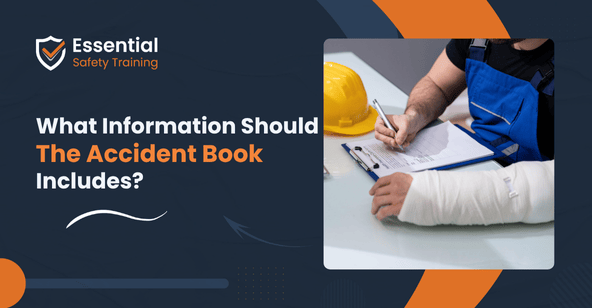
Many professionals in the UK are unsure about what information should be included in the accident book. This lack of documentation can cause confusion, disputes and even sometimes legal problems.
An accident book helps businesses, schools, and sports clubs comply with UK health and safety regulations. It protects people and manages risks for future safety. The primary purpose of an accident book is to keep a record of accidents and injuries in line with UK health and safety laws, including RIDDOR.
If you are thinking, What Information Should the Accident Book Include? Everyone should be aware of the accident book and how to use it. This guide covers everything that UK organisations need to know about the accident book and its legal importance.
What Is An Accident Book?
An accident book is a logbook to record details of accidents, injuries, or incidents that occur in the workplace. In the UK, it is a legal requirement for businesses with 10 or more employees to have a workplace health and safety policy.
The main purpose of the accident book is to:
🔹 Record workplace accidents and injuries
🔹 Provide precise incident details.
🔹 Support accident investigations.
🔹 Identify and prevent recurring hazards.
🔹 Serves as evidence for insurance and legal claims.
🔹 Comply with the social security and health and safety laws.
🔹 Help manage workplace safety.
The Health and Safety Executive (HSE) has created an Accident book BI 510, and there are many alternative accident books you can follow. You can also create your own accident book as long as it contains all of the necessary information and complies with data protection regulations such as GDPR.

Why is an accident book important?
Accident books are crucial for maintaining workplace safety and compliance with legal requirements. It accurately records all injuries and accidents, which helps with investigations and insurance claims. It’s not just a box to tick, and it actually helps stop accidents from happening again.
Maintaining an accident book can help employers identify patterns and risks and then take action to prevent future problems. If you don’t keep a proper record, you could face legal trouble or struggle to meet health and safety rules. And let’s be honest, that’s a risk no sensible business should take.
The accident book also ensures that everyone, both employers and staff, is clear and accountable in the event of an injury. Additionally, it’s not just good practice but also required by UK laws, such as the Social Security Regulations and RIDDOR.
When is accident book required in workplace?
If any workplace has 10 or more employees, it is legally required to keep an accident book. This applies to all sectors, including offices, factories and retail, and it is outlined under the Social Security (Claims and Payments) Regulations 1979.
Specific industries, such as mining, quarrying, and manufacturing, are required to maintain an accident book, regardless of the number of employees they have. This ensures the proper documentation of workplace injuries, which is crucial for audits and investigations.
Even small businesses with fewer than 10 employees should also maintain an accident book. This helps you maintain health and safety management and also comply with regulations such as RIDDOR. It is not just a logbook; it is a process of protecting people from future injuries.
Why is an accident book for sports club important?
Sports clubs face many challenges during training, matches, or events, and injuries can occur to players, coaches, or even spectators. That’s why maintaining an accident book is crucial for logging incidents and preparing for future needs.
Having an accident book helps club managers comply with health and safety regulations and streamlines support for insurance or compensation claims if necessary. It’s simply best practice for any sports organisation wanting to stay compliant with the law.
Why Accident for Schools is important?
Accidents can happen at any time in a school. Therefore, every school should be prepared for various types of accidents and injuries. Whether a student falls during physical education or a staff member gets injured on site, it is essential to maintain an accident book.
Maintaining an accident book helps schools respond appropriately, identify accident patterns and enhance safety measures. This also reassures parents and staff members that the school treat every injury seriously. This creates a safe environment for students, teachers, and staff, and also ensures compliance with legal obligations.
The accident book supports safeguarding efforts and ensures the school meets its legal requirements under RIDDOR and other health and safety laws. If a claim or inspection should ever come up, a detailed record is extremely valuable for your protection. It’s a simple but robust way to support both care and compliance as opposed to a culture of blame and scapegoating.
What information should an accident book include?
Accidents can happen at any time, and the details of the accident and the resulting injury should be recorded in the accident book. The SSCPR have a list that contains what should be entered into the accident book. The list includes:
🔹 The full name, address and occupation of the injured person
🔹 The date and time of the accident
🔹 The place where the accident happened
🔹 The cause and nature of the injury
🔹 The name, address and occupation of the person giving the notice, if someone other than the injured person.
Ultimately, this level of detail ensures that you have a comprehensive record for legal, insurance, and safety purposes. This ensures workplace safety and prevents reoccurrence.
Who is responsible for filling in accident book?
Ideally, the injured person should fill out the accident book. If the injured person is unable to complete the form, a witness or manager can fill out the accident book on their behalf. In the workplace, everyone should be aware of the location of the first aid kit and the accident book.
In every organisation, employers should train their employees to complete the accident book accurately, ensuring compliance with rules and regulations.

Legal requirements for accident book
The accident book is required in UK workplaces if there are 10 or more employees. Additionally, ensure that the data is protected under the GDPR. This legal requirement is set by the Social Security (Claims and Payments) Regulations 1979.
Every organisation should maintain the accident book record for at least 3 years after the incident, although there is no mandatory timeframe for keeping the record. Failure to maintain the record can lead to legal trouble, and sometimes organisations face penalties.
Riddor Accident Book
The Reporting of Injuries, Diseases and Dangerous Occurrences Regulations (RIDDOR) require employers and employees to report certain incidents in the workplace to the Health and Safety Executive (HSE).
The RIDDOR does not mandate a specific type of accident book. Organisations can maintain their accident book by keeping detailed records of reportable incidents, such as major injuries, occupational diseases, and dangerous occurrences.
Social Security Act Accident Book
An accident book is mandatory for organisations in the UK, as per the Social Security (Claims and Payments) Regulations 1979. It ensures employees can claim insurance and other benefits if they are injured in the workplace or any incident.
Organisations must keep the book available to everyone while also maintaining the record’s confidentiality, in line with the GDPR protection law. This book maintains a formal record of accidents and keeps the organisation informed of the circumstances surrounding injuries.
When must an entry be made in the accident book?
An entry should be made in the accident book as soon as possible after an accident or injury occurs. This helps to keep the record accurate and reduces legal risk. It is better to add more information in the record, which helps the investigation and claims.
Delaying entry can cause confusion and result in incomplete information. This also brought difficulties to the investigation and legal claims. Every organisation should follow this and comply with the health and safety regulations.
Why should you review the accident book?
Every organisation should review the accident book. It is crucial to improve safety, identify the risk factors and prepare for future accidents and injuries. This ensures workplace safety and helps the organisation to comply with the UK regulations.
Organisations that regularly review their accident books, improve risk assessments, adjust target areas, and take action to prevent future incidents. This inspires employees, boosts their confidence and ensures a safe workplace.
FAQ
What happens if you don’t have an accident book?
If you don’t have an accident book, you could face legal trouble, especially if someone gets hurt. It may lead to fines, failed inspections, or issues with insurance claims. It also means you’re not meeting basic health and safety duties expected by UK law and the HSE.
What are the 7 categories of RIDDOR?
The seven categories of RIDDOR cover the types of work-related incidents that must be reported in the UK. They include:
◾ Deaths
◾ Major injuries
◾ Over-seven-day injuries
◾ Work-related diseases
◾ Dangerous occurrences
◾ Gas incidents
◾ Injuries to the public requiring hospital treatment
How long do you keep accident books for?
In the UK, you must keep accident books for at least three years from the date of the last entry. This helps with insurance claims, legal cases, and inspections. Some businesses keep them longer as part of good health and safety practices.
Final thought
After the discussion, you will fully learn what information should the accident book include and why the information should be included. The accident book is not just some legal formality. It is an important document to keep employees safe, improve workplace safety and also support investigations and claims.
The accident book should contain the date, time, and location of the incidents, details of the injured person, actions taken, names of any witnesses, and more. This keeps an organisation safe and also helps to maintain the legal obligations under the UK health and safety laws.
Essential Safety Training

At Essential Safety Training, we deliver a blend of online courses on safety and compliance. As a top-notch award-winning platform in the UK, we value learners and keep our commitment by creating more accessible, expertly crafted courses.