 Food Hygiene

 Free CPD Certificate on Completion

 Fire Safety
No products in the basket.


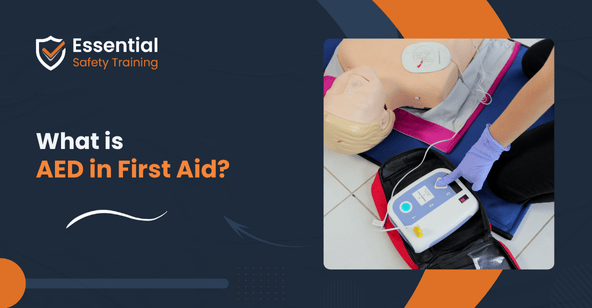
AED (Automated External Defibrillator) is a vital tool needed in first aid equipment for dealing with life-threatening crises. AEDs are easy to operate, even for individuals with no medical training, and they come with clear instructions that direct the user step by step. They are developed to be life-saving devices for anyone facing a cardiac crisis.
Understanding what is AED in first aid and how to operate it can save lives. When somebody suffers a sudden cardiac arrest, their heart stops pumping blood, and a quick act is essential. Performing CPR along with using an AED increases the possibility of survival greatly.
So, if you are unaware of what an AED does in first aid or have never used one, you are in the right place. This blog post will explore the topic in-depth, providing insights into what you must know about AED, including when to use it and how it works in a first-aid situation. Let’s dive deep.
What is an AED?

AEDs (Automated External Defibrillators) are portable devices designed to treat sudden cardiac arrest (SCA) by sending an electric shock to the heart to restore normal rhythm. Unlike advanced medical machines, AEDs are simple, safe, and can be used by anyone to restart a stopped heart, making a big difference in emergencies.
In AED proper instructions on how to operate it are given in the AED. If a person doesn’t breathe or don’t show any signs of life then immediate use of AED is a must. This machine not only helps to give an electric shock to the heart but it also gives the shock based on the rhythm of heartbeat or breathing.
AED not only saves a person. Rather, it’s one of the key elements of ensuring proper Basic Life Support (BLS). Every public place and first aid kit should include this device to ensure proper first aid in any kind of emergencies.
Why is it important to learn how to use an AED?
Now, suppose you are in a packed place, and someone collapses. You will notice that people around you panic and are unsure what to do. At that moment, you will be the one who comes forward and saves a life.
You will be empowered as you know how to use AED. In somebody’s worst moment it can make you a hero as it is a life-saving device because it is more than just a skill.
We can save more lives when more people know how to use AEDs. Sudden Cardiac Arrest can occur at any time to anybody. It doesn’t give any alerts—the chances of survival increase when AEDs are available and people are trained.
Ordinary people like you can use AED if they want help in an emergency. Because AEDs are not just for doctors or qualified experts.
What is AED in first aid?

During Sudden Cardiac Arrest (SCA), to restore a heart normal rhythm, Automated External Defibrillator (AED) devices deliver a shock. When the heart suddenly stops beating, causing unconsciousness and halting breathing then, SCA occurs.
AED quickly restore the heart function to normal, ensuring that oxygen reaches the brain and vital organs. This is why AEDs are essential in increasing survival rates.
AEDs are available in public places like schools, airports and other workplaces to assist quickly during emergencies. AEDs are generally used by medical specialists and first responders.
How is AED different from CPR?
In an emergency, CPR and AED perform various objectives. CPR, or cardiopulmonary resuscitation, means using chest compressions to keep blood flowing while the heart is stopped. It keeps circulation to the brain and lungs. CPR doesn’t need any equipment; you can do CPR with your hands.
On the other hand, an AED is a device that analyses the heart’s rhythm. The AED delivers an electric shock if it sees that the heart is not beating normally. CPR helps with bodywork, while AEDs try to fix the heart’s rhythm. Together, they work to give someone the best chance of survival during sudden cardiac arrest.
How Does an AED Work?
By analysing the rhythm of the heart and determining if a shock is needed, an AED works. AED will instruct to give an electric shock automatically if the machine detects an irregular or absent rhythm, known as arrhythmia. This particular shock will help the heart re-establish a regular rhythm and flow blood again, called defibrillation.
Let’s take a look at a few steps on how an AED works:
- Turn on AED: Most AEDs can be turned on by voice prompt activation when you press the “ON” switch or open the lid.
- Attach the Pads to the Patient’s Chest: For the person experiencing cardiac arrest, you just need to attach the AED with sticky pads to the bare chest.
- Allow the AED to diagnose the heart rhythm: When the pads are attached, the AED evaluates the heart activity. You must ensure you are not touching the person while the AED is doing this.
- Give a shock if required: When it detects that defibrillation is needed, the AED instructs you to press the button to deliver the shock. Some AEDs deliver the shock automatically.
- Continue CPR if required: The AED may inform you to continue CPR after the shock is delivered. You must rotate between giving CPR and following AED instructions when the heart doesn’t restart immediately.
An AED device is easy and comfortable because it does most of the work. It notifies you whether a shock is required and guides you through the process.
When should you only use an AED?

When somebody is unresponsive and not breathing, or their breathing is irregular, then you must use an AED. These are the symptoms of cardiac arrest. You should look for the following:
- When a person falls unconscious unexpectedly
- When someone is not responding to speak or shake
- When someone is breathing, the sound is odd and abnormal (like suffocating)
- When somebody is shifting blue due to a shortage of oxygen
You should act if you see any of these symptoms. Then contact with emergency medical services (EMS) and take an AED. As soon as possible, use the AED after starting CPR. Without defibrillation, the chance of survival decreases by 10% for every minute.So every minute is important and and counted here.
You may have some concerns about whether using an AED is dangerous or complex. But don’t worry—an AED is foolproof. If the machine detects a life-threatening heartbeat, it will give a shock. The AED will not provide a shock unless the heartbeat is normal or not in cardiac arrest.
Common myths about AED
There are a lot of myths about using an AED, which makes individuals anxious. Let us take a look at some of them:
Myth: Using AED can injure someone even if they dont need it
Unless AED detects an unstable heart rhythm, it won’t shock an individual. AED won’t just start if the individual doesn’t suffer cardiac arrest. Rather than hurting someone, you are much more likely to protect someone’s life.
Myth: To use an AED, you require medical training
Anyone can use an AED, while first aid training is beneficial. You do not need any medical knowledge to use an AED because this device provides clear instructions and will guide you through the process.
Myth: AEDs are unavailable in many places and also expensive
Anyone can buy AED devices in many public places, such as schools, gyms, airports, and shopping malls. If you know where to look, you will find them everywhere because they are becoming more common and affordable.
Myth: Before using an AED, you should wait for medical specialists
Timing is crucial during a cardiac arrest. If an AED is available, you should use it immediately, but you should always contact for aid. Your chances of survival are better if you act very soon.
Where can AEDs be found?
A person’s life can be saved quickly by finding an AED. You don’t have to search far because AEDS are becoming more familiar in public places. Many organisations and businesses are now noticing the value of having an AED.
Hospitals and medical centres not only stock AEDs but there are also some of the most common public places where you can find AEDs. They are:
- Airports:
Every day, a lot of people travel through the Airport. And stressful cases can begin health emergencies as many travellers encounters long trips.
In multiple places AEDs are installed in most of the Airports. Like boarding gates or waiting areas in airports you might notice where people gathers most.But you can find AEDs near security checkpoints, restrooms, or information desks.
During your time in an Airport, for a moment, you must look everywhere for AED signage. Because in emergency circumstances, it will be good for you to know where they are.
- Schools:
To protect students, teams and visitors, many schools are investing in AEDs. Although it is a rare scenario that youngsters experience sudden cardiac arrest. But it doesn’tt mean that cardiac troubles only happen to adults.
Many schools place AEDs near athletic fields or gyms because physical activities like sports can occasionally trigger these emergencies. Schools usually have AEDs in the main office or hallways for easy access.
If any emergency occurs it is essential to know about the AED location. So school staff, parents and teachers should note down where AEDs are located on school grounds.
- Shopping Malls:
AEDs are available in familiar places like malls. With so many people around, the chances of someone needing an AED increase. Because daily, these places see large audiences. You will find AED near entries, customer service desks, and food courts in many shopping malls.
Look for the bright signs that point to AEDs when you go out shopping. This knowledge could make a difference in an emergency as it only takes a moment.
- Sports arenas:
During events, stadiums and sport arenas host huge crowds. Emergencies can occur due to the excitement and adrenaline in the atmosphere. In visible places like main concourses, around restrooms and next to accommodation stands, these venues usually install AEDs. Knowing where AEDs are is always helpful, but event teams are generally trained to use them.
Take a fast scan of your surroundings for AEDs if you are attending a big match or show. Next to emergency exits or fire extinguishers, you may notice them.
- Workplaces
In fact, many companies and organisations have begun to have AEDs in their offices. It’s just part of creating a safe work environment. You’ll mostly see them near the main lobby or a break room or with first aid kits. The idea is to put them so people can find them if someone at work goes into cardiac arrest.
If you work in an office, find out from your employer where AEDs are and ask them if they have any. In fact some companies offer AED and CPR training as part of their employee safety programmes.
Frequently Asked Questions
Is it safe to use an AED?
Yes, it’s safe. They are programmed to give a shock only if the heart needs it. If the person’s heart is working normally, they will not give a shock. It prevents the chance of harm from happening accidentally.
How do I know if an AED is working?
AEDs do routine checks to see if they work. They almost have a green light or checkmark status to notify users they are ready to use. If the AED signals a problem, alert someone who can get it serviced.
How quickly should I use an AED?
As soon as someone collapses from sudden cardiac arrest, you should use an AED. For every minute without defibrillation, the chances of survival decline by about 10%. Acting quickly makes a big difference.
Do I need to do CPR after using an AED?
If the person starts breathing again, you should go right back to using the AED and then to continue CPR. The AED will guide you on whether to continue CPR or deliver another shock if needed. CPR helps maintain blood flow until the heart recovers.
Why is AED training important?
AEDs are easy to use but training will build your confidence. It will prepare you for what to do in an emergency. CPR and AED training is available in many workplaces and organisations to ensure people know what to do in case of a cardiac emergency.
Can I use an AED in wet conditions?
Moving the person to a dry area before using the AED is best. Water can conduct electricity, making it unsafe to deliver a shock. Dry the person’s chest before applying the AED pads to ensure a good connection and reduce risks.
Do AEDs require maintenance?
Yes, AEDs need routine maintenance to ensure they are ready when needed. This includes checking battery life, pad expiration dates, and making sure the device runs regular self-tests. The AED will alert you if it needs service or replacement parts.
Conclusion
Anyone can use life-saving devices called AEDs. You don’t have to be a medicine expert. The AED will guide you the rest of the way, but you only need a willingness to help.
Sudden cardiac arrest is doubtful, but acting fast can help save somebody’s life. Don’t be scared to use an AED if you encounter a crisis. The device is easy and secure.
What is AED in first aid? It’s an effective device that can restore a normal heartbeat during a cardiac emergency, and learning how to operate it makes you a useful first responder. In cardiac emergencies, every second counts, and your decision to get involved can save a life.
In fact, take note of where AEDs are located around you, take a first aid course and be prepared to perform if the moment arrives. You will be prepared to create an optimistic difference in someone’s life.
Essential Safety Training

At Essential Safety Training, we deliver a blend of online courses on safety and compliance. As a top-notch award-winning platform in the UK, we value learners and keep our commitment by creating more accessible, expertly crafted courses.